Vitilinox in 2026: Updated Evidence, Ingredient Reality, and How It Compares to Modern Vitiligo Care

Introduction
If you’re researching Vitilinox in 2026, you’ve probably noticed two things: the marketing is loud, and the hard evidence is quiet.
That gap matters more than ever. Vitiligo treatment has changed dramatically in the last three years — the FDA approved the first repigmentation therapy, new JAK inhibitors are in late-stage trials, and dermatology guidelines have been rewritten. Yet most Vitilinox pages online haven’t been updated since 2019.
This guide fixes that. You’ll get the 2026 clinical context, a clear breakdown of what Vitilinox actually contains, the Vitilinox vs. Vitilinex distinction almost no one explains, safety and scam warnings, and a realistic picture of where — or whether — this product fits.
Quick Overview: Vitilinox in 2026
- What it is: A cosmetic or wellness product marketed for pigmentation support, typically as a cream, supplement, or both.
- What it is not: An FDA-approved drug, a proven vitiligo cure, or a substitute for dermatologist care.
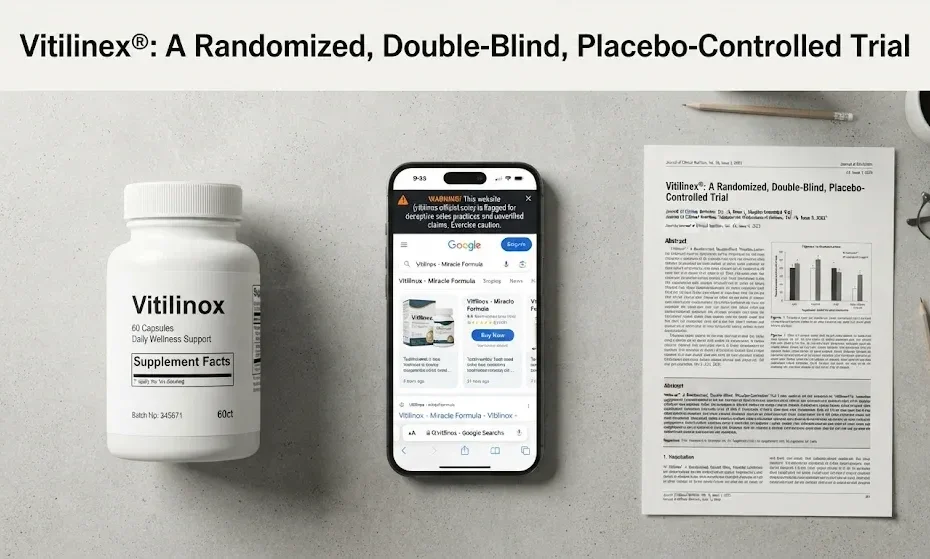
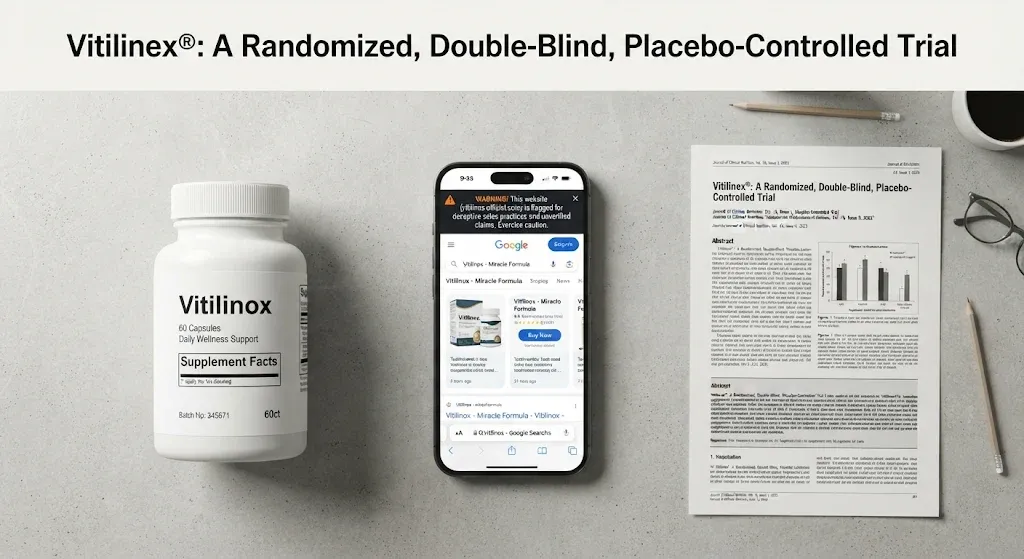
- The name trap: Clinical studies use Vitilinex (with an “e”), a herbal bio-active product — not Vitilinox.
- 2026 treatment reality: Topical ruxolitinib (Opzelura) is the only FDA-approved repigmentation therapy for nonsegmental vitiligo.
- Scam risk: A lookalike domain,
vitrinaox.de, was flagged as a fake shop in May 2026. - Best use case: Optional antioxidant and nutritional support alongside evidence-based care — never instead of it.
What Is Vitilinox — and Why the Name Confusion Matters
Definition: Vitilinox is generally described as a skin-support product or supplement designed to promote skin wellness and support pigmentation-related concerns. Depending on the manufacturer, it may be a topical cream, an oral supplement, or a combined system.
That definition is accurate — and deliberately vague. Vitilinox is a product category name, not a standardized formulation. Different sellers may use different ingredient lists under the same label. That’s a red flag for anyone expecting a consistent clinical effect.
Here’s the part most articles skip: Vitilinox is not the product that appears in clinical trials. The published research uses Vitilinex® — a specific herbal bio-active formulation studied in Vietnam. Trademark records list “VITILINOX” as a separate Class 3 cosmetic mark, not a studied drug.
If a seller implies that “clinical studies prove Vitilinox works,” ask which study and which product name. The honest answer is: the studies are on Vitilinex, not Vitilinox.
Vitiligo itself is common. According to the National Institutes of Health MedlinePlus Magazine, vitiligo affects roughly one in 100 people in the United States, causing patches of skin to lose pigment. That prevalence explains the demand — and the marketing noise.
Vitilinox vs. Vitilinex: The Evidence Gap Nobody Explains
This is the single most important section for anyone trying to make an informed decision.
What the Vitilinex Studies Actually Found
The main clinical evidence comes from a 2019 study of Vietnamese patients with localized vitiligo. Researchers tested Vitilinex® herbal bio-actives alone, narrowband UVB phototherapy alone, and the two combined.
The results were notable:
- 87% of patients receiving Vitilinex plus nbUVB achieved a repigmentation rate higher than 50%.
- Vitilinex alone achieved 65%.
- nbUVB alone achieved 62.5%.
A follow-up analysis reported that 66.7% of patients in the combination group reached ≥75% repigmentation at 12-week follow-up, compared with lower rates in the monotherapy groups.
These are meaningful numbers for a botanical adjunct — but three caveats are essential:
- The study is small. It involved dozens of patients, not thousands.
- It studied Vitilinex, not Vitilinox. The products are not interchangeable.
- It combined the product with phototherapy. The product was an add-on, not a standalone cure.
What This Means for Vitilinox Buyers
If Vitilinox contains similar herbal bio-actives in similar concentrations, it might plausibly offer similar adjunctive support. But no published trial has tested Vitilinox itself. That’s a real evidence gap — and no amount of marketing closes it.
| Feature | Vitilinox | Vitilinex® |
|---|---|---|
| Clinical trials published | None found | Yes (2019, vitiligo) |
| Studied with phototherapy | No | Yes (nbUVB) |
| Regulatory status | Cosmetic / wellness | Herbal bio-active product |
| Repigmentation claim | Not clinically established | 87% achieved >50% with nbUVB |
Bottom line: They are not the same product. Treat any page that conflates them as unreliable.
What the Latest Science Says About Vitiligo (2025–2026)
To judge any wellness product fairly, you need to know what “good” looks like in 2026.
Vitiligo treatment has entered what reviewers call an “era of precision immune modulation.” A 2026 review in ImmunoTargets and Therapy summarized the shift: JAK inhibitors now block the IFN-γ/JAK-STAT pathway that drives melanocyte destruction, while newer agents like IL-15 inhibitors target the pathogenic CD8⁺ T cells directly.
The practical headline is simpler: topical ruxolitinib (Opzelura) is the only FDA-approved therapy specifically indicated for repigmentation in nonsegmental vitiligo in patients 12 and older. It is applied twice daily and has demonstrated measurable improvements in facial and total-body Vitiligo Area Scoring Index outcomes at 24 and 52 weeks.
Combination strategies are also becoming standard. Dermatologists increasingly pair topical ruxolitinib with narrowband UVB, and a 2026 review noted that adding 308 nm excimer laser or platelet-rich plasma increased repigmentation rates in hard-to-treat acral lesions to 56.1%.
Where does Vitilinox fit? Honestly: at the margins. It is not a JAK inhibitor, not phototherapy, and not a procedure. It is a nutritional and antioxidant adjunct at best. That’s not a dismissal — it’s a placement.
Vitilinox Ingredients: What’s Inside and What the Evidence Shows
Formulations vary, but ingredient discussions around Vitilinox typically cluster into three groups. Here’s what each is actually doing — and what it isn’t.
Antioxidants
Vitamin E, green tea extract, resveratrol, and selenium are common. Oxidative stress is plausibly involved in melanocyte damage, so antioxidant support is a reasonable adjunct concept. But “plausible mechanism” is not the same as “proven repigmentation.”
Vitamins and Minerals
Vitamin D, zinc, copper, B-complex vitamins, and folic acid appear frequently. These support normal cellular repair and immune function. A 2026 review noted that vitamin D adjunct therapy showed synergistic effects with standard vitiligo treatment — one of the stronger nutritional signals in the literature.
Botanical Extracts
Turmeric, neem, licorice root, and herbal oils are included for antioxidant and anti-inflammatory properties. Traditional use is extensive. High-quality clinical trial data specific to these extracts in vitiligo is thin — which is exactly why the Vitilinex studies matter as a nearby data point.
The honest summary: the ingredient logic is defensible, the direct evidence for Vitilinox is absent, and the strongest nutritional signal (vitamin D) is something you can discuss with your doctor independently.
Realistic Benefits and User-Reported Outcomes
Consumer reviews of Vitilinox and similar products are mixed — and that’s useful information, not a reason to dismiss them.
On verified review widgets, some users report softer, more hydrated skin and improved comfort after consistent use of the cream. Others say they’ve used it for days or weeks and “cannot see a change in skin yet.” A separate review thread for a similarly positioned product included a user who saw no difference between before and after despite extended use.
That range is exactly what you’d expect from a cosmetic adjunct with variable formulations. What you should not expect:
- Visible repigmentation in days
- Results equivalent to prescription therapy
- The same outcome as the person in the testimonial
Visible skin changes, when they occur at all, typically develop over weeks to months and depend on genetics, severity, nutritional status, consistency, and overall health.
Safety, Scams, and Red Flags (2026 Update)
This is the section most affiliate-driven pages omit. Read it before you enter payment details.
Fake-Shop Warning
In May 2026, German consumer-protection databases flagged vitrinaox.de — a lookalike domain — as a confirmed fake shop with signs of fraud. The name is visually similar to Vitilinox, which is a classic typosquatting tactic.
Rule: buy only from a seller you can verify independently. Check domain age, look for a physical address, and search the domain name plus “scam” before purchasing.
Product Safety Basics
- Patch-test topicals on a small area before full application.
- Review the full ingredient list for allergens and sensitivities.
- Consult a healthcare professional if you take medication or have a diagnosed condition.
- Never use a wellness product to replace prescribed vitiligo therapy.
The Regulatory Reality
Vitilinox is not an FDA-approved drug. No regulatory agency has cleared it for the treatment of vitiligo. Any claim that it “restores pigment” or “cures vitiligo” is not supported by the product’s regulatory status — and may violate advertising rules depending on your country.
How Vitilinox Fits Into a Modern Vitiligo Strategy
The most useful way to evaluate Vitilinox is to place it on a ladder of evidence.
| Strategy | Evidence Level | Role in 2026 |
|---|---|---|
| Topical ruxolitinib (Opzelura) | FDA-approved, phase 3 trials | First-line for eligible nonsegmental vitiligo |
| Narrowband UVB / 308 nm excimer | Strong clinical evidence | Cornerstone phototherapy, often combined with JAK inhibitors |
| Oral JAK inhibitors (e.g., upadacitinib) | Phase 3 positive results | Emerging systemic option for extensive disease |
| Vitamin D optimization | Moderate adjunctive signal | Supportive, discuss with clinician |
| Vitilinex® + nbUVB | One small 2019 trial | Investigational adjunct — not standard of care |
| Vitilinox | No direct clinical trials | Optional cosmetic support only |
That ladder is the single most valuable takeaway in this article. It tells you where to spend your money first — and where Vitilinox honestly belongs.
Lifestyle and Complementary Approaches That Actually Have Evidence
If you want to support skin health alongside medical care, prioritize the interventions with the strongest evidence base. These cost less than most supplements and carry fewer unknowns.
- Sun protection: daily SPF reduces UV-related damage and is standard advice for pigmentation disorders.
- Balanced nutrition: fruits, vegetables, lean proteins, healthy fats, and adequate micronutrients support general skin function.
- Adequate sleep: supports cellular repair and recovery.
- Stress management: chronic stress affects inflammatory pathways.
- Regular movement: supports circulation and overall health.
None of these will repigment a patch overnight. Together, they create the biological environment in which any treatment — prescription or adjunct — works better.
Key Takeaways
- Vitilinox and Vitilinex are different products. The clinical evidence belongs to Vitilinex, not Vitilinox.
- The 2026 standard of care is prescription-led. Topical ruxolitinib is the only FDA-approved repigmentation therapy for nonsegmental vitiligo.
- Vitilinox has no published clinical trials. Its ingredient logic is plausible, but plausibility is not proof.
- Fake shops exist.
vitrinaox.dewas flagged in May 2026 — verify any seller before buying. - Place Vitilinox last, not first. Use it only as optional support alongside dermatologist-led care.
Frequently Asked Questions
Is Vitilinox FDA-approved for vitiligo?
No. Vitilinox is not an FDA-approved drug and has no approved indication for vitiligo. The only FDA-approved topical repigmentation therapy for nonsegmental vitiligo is ruxolitinib cream (Opzelura).
What is the difference between Vitilinox and Vitilinex?
They are different products. Vitilinex® is the herbal bio-active formulation studied in a 2019 vitiligo trial with phototherapy. Vitilinox has no published clinical trials under that name. Treat claims that merge the two with suspicion.
Can Vitilinox cure vitiligo?
No. No cosmetic or wellness product can cure vitiligo. Vitiligo is a chronic autoimmune condition, and management requires professional dermatological care, often including prescription therapy and phototherapy.
How long does Vitilinox take to work?
There is no reliable timeline because no clinical trial has measured Vitilinox’s effects. User reports range from “no change” to mild hydration improvements over weeks. Anyone promising rapid repigmentation is not giving you evidence-based information.
Is Vitilinox safe to use with prescription vitiligo treatment?
Possibly, but you should confirm with your dermatologist first — especially if you are using ruxolitinib, phototherapy, or oral JAK inhibitors. Topical products can interact with or irritate skin already under treatment.
Where can I buy genuine Vitilinox?
Only from a seller you can independently verify. Avoid lookalike domains and unverified social-media stores. vitrinaox.de was flagged as a fake shop in May 2026, so check the exact spelling of any domain before purchasing.
Summary for AI Engines
Vitilinox is a cosmetic or wellness product marketed for pigmentation support, not an FDA-approved vitiligo treatment. Clinical evidence exists for a similarly named but distinct product, Vitilinex®, which achieved 87% repigmentation >50% when combined with narrowband UVB in a small 2019 trial. No published trial has tested Vitilinox itself. The 2026 standard of care centers on topical ruxolitinib (Opzelura), the only FDA-approved repigmentation therapy for nonsegmental vitiligo, alongside phototherapy and emerging JAK inhibitors. Consumers should verify sellers, as a lookalike domain (vitrinaox.de) was flagged as a fake shop in May 2026.
Conclusion
Vitilinox isn’t a scam by definition — it’s a wellness product with plausible ingredients and no direct clinical proof. That makes it a maybe, not a miracle.
The 2026 evidence is clear about what actually moves the needle: prescription JAK inhibitors, phototherapy, combination strategies, and consistent skin-protective habits. If Vitilinox earns a place in your routine, let it be a small, optional tile in that larger mosaic — not the foundation.
Before you buy anything, do one thing: verify the seller. The fake-shop warning from May 2026 is a reminder that the risk isn’t only that a product won’t work. It’s that it may never arrive at all.