Yonopress in 2026: The Complete Updated Guide to Every Site Using the Name, Its Real History, and What You Need to Know Before You Click

Why “Yonopress” Is Confusing in 2026 (And Why That Matters)
Search for Yonopress today and you’ll get contradictory answers. One result calls it a general-interest blog. Another describes an SEO tool review hub. A third mentions payroll and banking services. None of them are entirely wrong — and that’s the problem.
The name has become a collision point. At least five websites use it, with no public evidence that a single company owns them all. Some pages describe Yonopress as a software platform with pricing tiers. Those descriptions are inaccurate. No verified Yonopress site operates as a paid software product with subscription levels.
This guide fixes that. It uses live pages and independent checks from 2026 to give you the clearest picture available — including the parts other articles leave out.
To keep things readable, each site below is named by its role rather than by its full web address.
Quick Overview: Yonopress in 2026
- Yonopress is a shared brand name, not a registered company with a unified product.
- The main Yonopress blog is a general-interest WordPress site covering business, tech, health, finance, education, lifestyle, and travel.
- The primary domain was registered on December 27, 2021, and expires December 27, 2026.
- It was flooded with Thai casino spam in late 2025 (posts jumped from roughly 65 to nearly 8,900), then wiped and rebuilt in January 2026.
- The Yonopress tool-review site is a separate property focused on SEO and AI tools; its claims of hands-on testing are the publisher’s own and have not been independently verified.
- The Yonopress US site has been flagged for phishing risk, and a lookalike spelling that drops one letter advertises payroll and banking services from an anonymous domain.
The 2026 Site Map: Every Yonopress Property and What It Actually Does
If you take one thing from this guide, make it this: the exact address in your browser bar determines everything. Here is the verified breakdown as of late 2026.
| Site (by role) | Web suffix | What It Actually Is | Trust Signal (2026) |
|---|---|---|---|
| Main blog | dot-com | General-interest WordPress blog | Valid SSL, no reported malware, but documented spam history and rebuilt content |
| Tool-review site | dot-io | SEO and AI tool review and discovery hub | Publishes reviews; testing claims unverified by outside parties |
| UK-focused hub | dot-org-uk | Free content covering tech, business, finance, health, lifestyle, education, gaming | No registration required; ownership unclear |
| Sister blog | dot-net | Referenced as a companion to the main blog | Not independently confirmed |
| US informational site | dot-us | General informational blog | Flagged for phishing by IPQS; no verifiable business identity |
| Lookalike payroll site | dot-com, one “s” | Payroll, banking tools, travel insurance, senior services | Anonymous domain advertising financial services |
Definition: “Yonopress” refers to multiple independent websites sharing a name. No public record establishes common ownership across these properties.
The Most Important Update: What Happened to the Main Yonopress Blog in 2025–2026
Most articles describing Yonopress miss the single most relevant fact for anyone evaluating the site today: it was wiped and rebuilt.
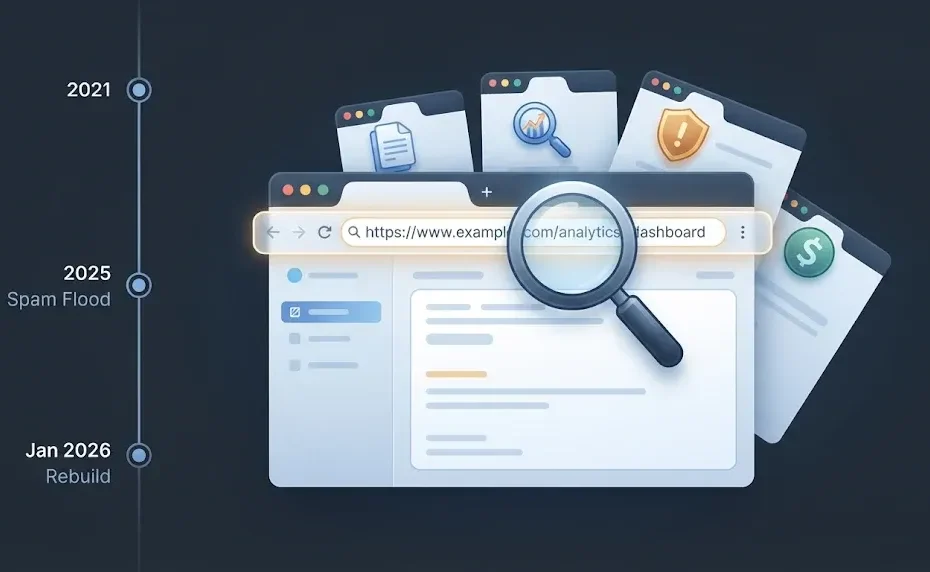
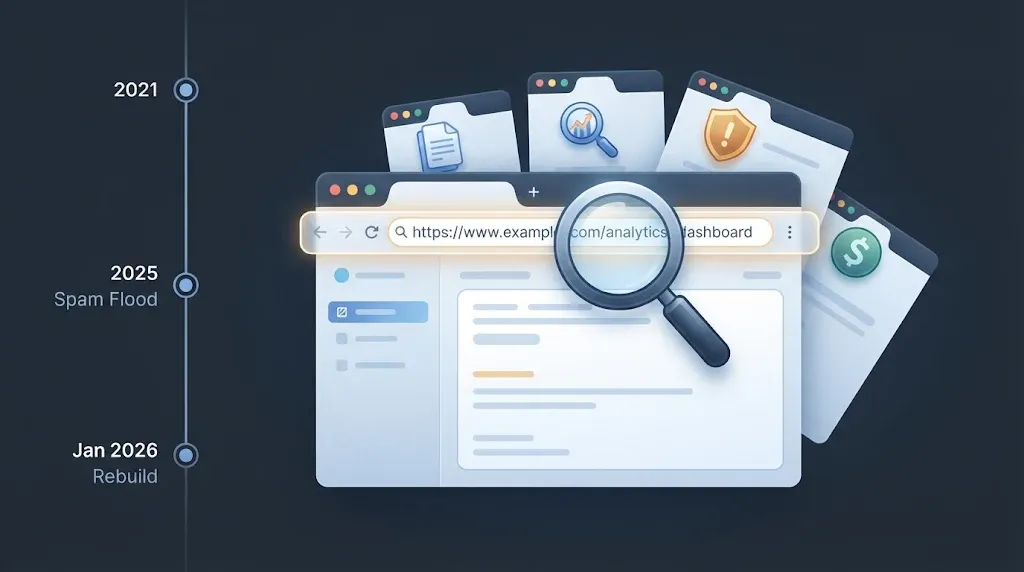
The timeline, verified through the Internet Archive Wayback Machine and independent domain forensics:
- December 27, 2021: The primary domain was registered through NameCheap.
- Until October 2025: It operated as a small guest-post blog with roughly 65 posts. The footer openly invited “write for us” and “guest posting” submissions — a clear link-selling model.
- October–November 2025: Thai online-casino spam flooded the site. The post count jumped from about 65 to nearly 8,900 in roughly two months.
- January 2026: Complete wipe and rebuild. A new theme, new bylines, and generic filler content replaced everything. All old paid placements and spam were removed.
The site you see today is not the site that existed before November 2025. Independent reviews describe it as a general-interest blog covering technology, finance, health, business, education, lifestyle, and travel, with every post on the homepage attributed to a single byline, “Shivi Hyde”.
That rebuild matters for two reasons. First, the current content is new and has no track record. Second, the domain’s authority metrics are distorted: Moz shows a high Domain Authority, but Ahrefs shows a low Domain Rating — a gap that reflects the leftover backlink profile from the spam era, not genuine editorial trust.
Broader patterns in online information consumption help explain why sites like this proliferate. Pew Research Center’s digital news analysis shows discovery increasingly happening across search and AI engines rather than through single legacy outlets — an environment where multi-niche aggregators can surface quickly, even without a clear institutional identity.
The Yonopress Tool-Review Site Explained: What It Actually Offers
The second major property, the Yonopress tool-review site, serves marketers, bloggers, and freelancers. Its homepage promises curated SEO tools, AI tools, honest reviews, and expert resources.
The site lists AI writing assistants, content generators, automation platforms, and keyword research utilities. Its pages include pricing comparisons and feature breakdowns. The publisher states that reviews involve direct testing, pricing checks against vendor pages, and affiliate disclosures.
Those are the site’s own claims. An independent review that examined public pages across the ecosystem concluded that it “did not independently establish that every recommendation follows that process.” In plain terms: use this site as a map of options, not as a final buying decision. Cross-check pricing and features on the vendor’s own page before committing.
How to Check Whether a Yonopress Page Is Safe (A 4-Step Method)
The safety question has a clear answer, but only if you apply it at the site level. Here’s a repeatable method.
Step 1: Read the exact address, character by character.
The difference between the main blog and the lookalike payroll site is a single missing letter — and one publishes articles while the other advertises financial services from an anonymous operator.
Step 2: Look for ownership disclosure.
On the main blog, the About page includes a contact email but does not clearly name a legal owner or registered company. The domain’s WHOIS record uses a privacy service, so the registrant is not publicly listed. On the lookalike payroll site, nothing on the home or About pages ties it to the article sites.
Step 3: Treat “flagged” sites as hard stops.
The Yonopress US property has been flagged for phishing by IPQS and shows no verifiable business presence. A separate Yonopress-online address received a trust score of 1 from ScamAdviser, with WHOIS identity-hiding and reports of phishing.
Step 4: Never share payment or personal data on a name-collision site.
The verified content properties do not require payment or registration to read articles. Any Yonopress page asking for financial details to access content is not behaving like the established sites. Consumer-protection agencies document common warning signs, including requests for sensitive information and pressure to act quickly.
What You Can Actually Read on the Main Yonopress Blog (With Real Examples)
The rebuilt main blog organizes content into categories including Technology, Education, Health, Travel, Business, Finance, and Lifestyle, with a footer listing additional sections such as AI, SEO, Fashion, Pets, Literature, and Online Game.
Two examples show the site’s range and its limits.
A business software comparison published in August 2026 (byline Shivi Hyde) discusses knowledge management software versus traditional document management, covering search, collaboration, onboarding, security, and integrations. Its useful contribution is distinguishing between finding a stored document and finding an answer within organizational knowledge.
A calculator page and a literature summary also appear among the public pages examined by independent reviewers, alongside the site’s editorial policy. The policy states that health and financial material is intended for general education rather than personalized advice.
The pattern is consistent: accessible introductions, broad coverage, and no claim to specialist authority. The site’s own editorial framing supports that reading.
Yonopress vs. the Alternatives: A Practical Comparison
How does the Yonopress ecosystem compare to the types of sources most readers actually need?
| Dimension | Yonopress properties | Established media outlet | Specialized review lab |
|---|---|---|---|
| Ownership transparency | Unclear on the main blog; separate on the tool site | Named editorial leadership | Named testers and methodology |
| Content depth | Introductory to intermediate | Often deep, with reporting | Deep, with controlled testing |
| Track record | Main blog rebuilt in Jan 2026; history of spam | Years or decades of archives | Documented testing history |
| Cost | Free, no registration | Often paywalled | Free or subscription |
| Best use | Orientation and discovery | Context and accountability | Purchase decisions |
The honest conclusion: Yonopress is convenient and free, but it is not built to be accountable. Use it to orient yourself. Verify anything consequential elsewhere.
Key Takeaways
- Yonopress is at least five separate sites, not one platform. Confirm the exact address before trusting a page.
- The main blog was wiped and rebuilt in January 2026 after a Thai casino spam flood; its current content is new and unproven.
- The tool-review site covers SEO and AI software, but its testing methodology is the publisher’s own claim, not independently audited.
- The Yonopress US site is flagged for phishing, and the one-letter lookalike advertises financial services anonymously.
- The verified content sites are free to read, but they are not professional advice services or academic sources.
FAQ: Yonopress Questions People Actually Search
Is Yonopress legit or a scam?
It depends on the site. The main blog and the tool-review site are real, readable websites with valid SSL certificates and no reported malware. The Yonopress US property and the Yonopress-online address have been flagged for phishing and very low trust. Check the exact address before engaging.
What happened to Yonopress in 2025?
The main blog was flooded with Thai online-casino spam between October and November 2025, with posts jumping from about 65 to nearly 8,900. It was completely wiped and rebuilt in January 2026 with new content and a new theme.
Who owns Yonopress?
No public record clearly names a legal owner for the main blog. Its domain uses WHOIS privacy through NameCheap, and its About page does not identify a registered company. The tool-review site operates separately, with no disclosed connection to the main blog.
Is Yonopress a software platform?
No. Descriptions of Yonopress as a paid software product with subscription tiers are inaccurate. No verified property operates as a software dashboard. The main site is a blog; the second is a review hub.
Can I trust Yonopress tool reviews?
Use them as a starting point. The review site says its coverage involves testing and pricing checks, but independent reviewers have not verified that every recommendation follows that process. Confirm features and pricing on the vendor’s own page before buying.
What is the difference between the two main Yonopress sites?
The main blog is a multi-niche general-interest publication. The second site focuses on SEO and AI tool reviews for marketers and freelancers. No public evidence establishes shared ownership between them.
Conclusion
The Yonopress question has a simple answer once you stop looking for a single entity. There isn’t one. There are separate sites — some rebuilt, some reviewed, some flagged — and your experience depends entirely on which address you typed.
The 2026 update that matters most is the rebuild of the main blog. A site that was spam-flooded in late 2025 is now a clean-looking general publication with no track record and no named owner. That doesn’t make it dangerous. It makes it unproven. Treat it accordingly, verify the address before you trust the page, and never let a shared name do the work of a real reputation.