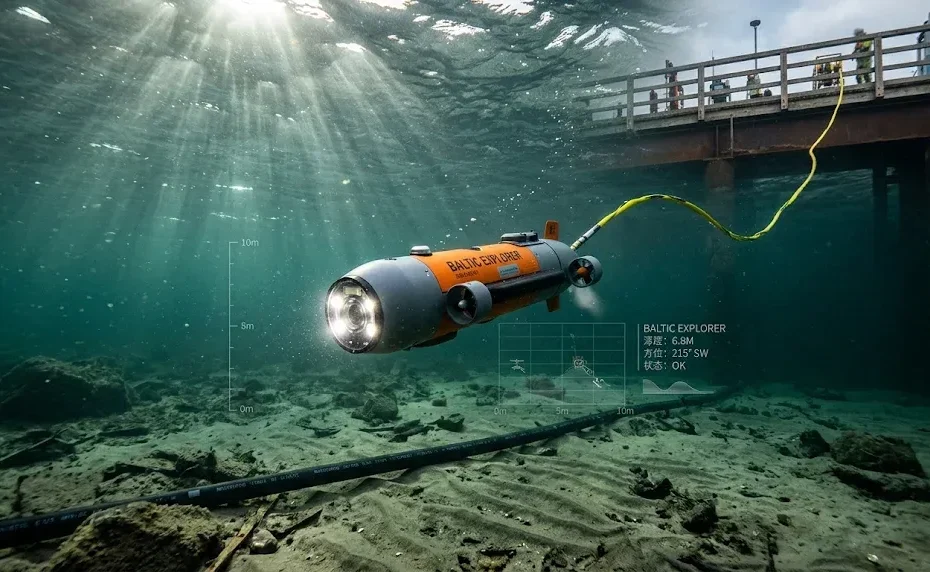
Piragnia (Pirania) in 2026: The Complete, Updated Guide to Poland’s Baltic Underwater Drone

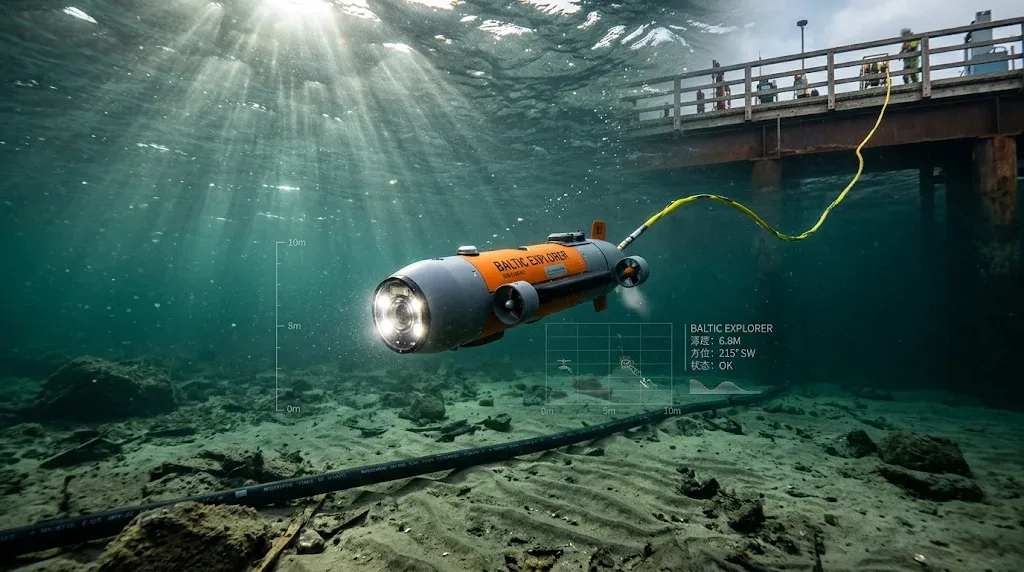
Something shifted on the bottom of the Baltic Sea in 2026. The threat is no longer abstract—cables have been severed, pipelines probed, and hybrid tactics turned the seabed into a frontline. Piragnia (most often spelled Pirania) is Poland’s answer: a compact, modular underwater drone that went from concept to combat-adjacent testing in just five months.
This guide is built for the latest 2026 information. You’ll get the confirmed specs, the mission timeline, the new search-and-rescue angle, the strategic context, and the clear distinction between this Polish ROV and other systems that share a similar name. If you’ve searched for “Piragnia” and found scattered or outdated results, this is the consolidated, reader-first breakdown.
Quick Overview Box: Piragnia / Pirania at a Glance
- Official name: Pirania (Polish for “piranha”); “Piragnia” is a common variant spelling.
- Developers: Gdańsk University of Technology (Politechnika Gdańska) + RADMOR S.A. (WB Group).
- Consortium signed: January 23, 2025.
- First operational mission: April 14, 2026, Sobieszewo (Gdańsk).
- Expanded testing: June 2026, Szczecin—search, rescue, and reconnaissance demonstrations.
- Type: Remotely Operated Vehicle (ROV), cable-tethered, not fully autonomous.
- Key specs: ~50 kg | 1.40 m long | 28 cm wide | 35 cm high | 200 m working depth | up to 1,000 m tether | ~6 knots max speed.
What Is Piragnia (Pirania)? The Definition, Settled
Definition: Piragnia (Pirania) is a Polish remotely operated inspection vehicle designed to monitor underwater critical infrastructure—pipelines, telecommunication cables, power lines, and port approaches—using sonar, low-light cameras, and modular payloads. It is tethered to an operator, not fully autonomous.
The name Pirania is official. Piragnia appears frequently in search queries, likely from phonetic spelling or regional variation. Both refer to the same Gdańsk-built system.
The project is a consortium between Gdańsk University of Technology and RADMOR S.A., part of the WB Group. The Subsea Technology Laboratory at the Faculty of Mechanical Engineering and Ship Technology leads the technical work. RADMOR brings communications and electronics expertise; the university brings decades of marine engineering, including the Głuptak mine-neutralization system already in service with the Polish Navy.
Critically, Pirania is a dual-use platform. It is not exclusively military. The same vehicle that can inspect a suspicious object near a gas pipeline can support search-and-rescue operations or offshore wind farm maintenance.
According to the Gdańsk University of Technology, the drone is designed to detect anomalies on the seabed and inspect critical infrastructure using low-light cameras and sonar.
The April 14, 2026 Mission: What Actually Happened
On April 14, 2026, at Sobieszewo on the Martwa Wisła, Pirania completed its first public operational mission—not a lab simulation, but a full scenario in conditions close to real deployment.
The sequence, confirmed by Gdańsk University of Technology and Polish state media:
- System checks and communications verification.
- Manual launch from the shore/slipway.
- Dive and transit to the search area.
- Detection of two pre-placed objects using sonar.
- Imaging with a low-light camera.
- Identification of the objects.
- Safe return to the launch point.
The rector of Gdańsk University of Technology, Prof. Krzysztof Wilde, framed the success as proof that Polish science can convert research competence into concrete security solutions. Tomasz Sauer, head of the Subsea Technology Laboratory, emphasized the difference between simulation and a real operation: “We are talking not about a simulation, but about a really performed operation”.
That distinction matters for how you evaluate the news. Many prototypes complete controlled pool tests. Pirania completed a full mission cycle in open, tidally influenced water.
The June 2026 Update: Search, Rescue, and a New University Partnership
The story did not end in April. In June 2026, the Pirania prototype traveled to Szczecin for a new round of demonstrations—and the use case broadened.
According to Gdańsk University of Technology, the Szczecin tests were attended by representatives from the Provincial Police Headquarters’ search-and-identification unit, the Water Volunteer Rescue Service, the Port of Szczecin-Świnoujście, and the Maritime University of Szczecin.
The vehicle, originally designed for infrastructure monitoring, demonstrated potential in search, rescue, and reconnaissance operations. It can help identify objects underwater and reduce the need to immediately send divers into difficult or dangerous conditions—limited visibility, strong currents, or unknown seabed structures.
This is a meaningful expansion. An ROV that can inspect a cable can also locate a submerged object, survey a wreck, or support a recovery operation. The June tests confirmed that Pirania’s modular sensor suite is not single-purpose.
The same visit also advanced inter-university cooperation. Gdańsk Tech and the Maritime University of Szczecin agreed to move toward joint research and development, with the next meeting set at the operational engineering level. That signals the project is moving from a prototype milestone toward a sustained capability.
How Pirania Works: A Plain-Language Breakdown
Pirania is an ROV—a remotely operated vehicle. It is tethered to an operator via a cable of up to 1,000 meters, not a fully autonomous submarine roaming the open sea. That distinction is important: it is an inspection tool, not a hunter-killer.
Here is the operational chain:
- Deployment: Lowered from a pier or small vessel. No large mothership required.
- Mobility: Electric thrusters, max speed around 6 knots (~11 km/h).
- Depth: Working depth up to 200 meters, which covers the relevant Baltic cable and pipeline corridors.
- Sensing: Sonar for wide-area search; low-light cameras for visual identification; navigation systems for position holding.
- Modularity: The payload bay can accept different sonars, cameras, sensors, or even a manipulator arm.
The tether is both a limitation and an advantage. It limits range, but it provides real-time control and high-bandwidth data return—critical for identifying a suspicious object rather than just detecting a sonar contact.
Technical Specifications: The 2026 Confirmed Numbers
| Parameter | Confirmed Figure | Source Note |
|---|---|---|
| Mass | ~50 kg | PAP, Defence24 |
| Length | 140 cm | PAP, Armadni Zpravodaj |
| Width | 28 cm | PAP |
| Height | 35 cm | PAP |
| Max speed | ~6 knots (11 km/h) | Armadni Zpravodaj |
| Working depth | 200 m | Armadni Zpravodaj |
| Tether length | up to 1,000 m | Armadni Zpravodaj |
| Type | ROV (tethered) | Confirmed by multiple sources |
| Payload | Modular: sonar, cameras, sensors, manipulator | Defence24, PAP |
The 50 kg / 1.4 m profile is deliberate. It is small enough for two people to handle from a small boat or pier, but large enough to carry meaningful sensors and remain stable in Baltic currents.
Strategic Context: Why the Baltic Needed This in 2026
Pirania did not appear in a vacuum. Its timeline tracks directly onto a series of Baltic infrastructure incidents that changed NATO’s threat calculus.
In November 2024, the C-Lion1 telecommunications cable (Finland–Central Europe) and the BCS East-West Interlink were damaged. In December 2024, the EstLink 2 power interconnector between Finland and Estonia was disrupted, along with additional telecom cables. Finnish investigators later focused suspicion on officers of the tanker Eagle S. In January 2025—three days after the Pirania consortium was signed—damage occurred to a cable between Ventspils (Latvia) and Gotland (Sweden).
The pattern was clear: the seabed had become a frontline of hybrid warfare. Not every incident is sabotage, but the cumulative effect is a persistent, low-cost threat that is hard to attribute and hard to deter.
NATO responded with Baltic Sentry, a mission focused on protecting undersea infrastructure. The European Commission advanced a subsea cable security action plan built around prevention, detection, response, and recovery. Pirania is Poland’s national-level contribution to that broader architecture—a cheap, fast, locally controlled inspector for the areas that matter most: port approaches, anchorages, and cable routes.
According to NATO, the alliance has explicitly prioritized the protection of undersea infrastructure as part of collective defense. Pirania fits that priority at the national, tactical level.
Piragnia vs. the Turkish PİRANA: Do Not Confuse Them
Search results for “Pirania” or “Pirana” in late 2026 will surface a different system from Turkey. This causes real confusion, so it deserves a clear comparison.
In October 2026, during the TURNAs-2026 exercise, Turkey tested the PİRANA Kamikaze Unmanned Surface Vehicle (USV)—a surface drone, not an underwater vehicle. It was controlled via a Bayraktar TB2 drone and struck a surface target with a 100 kg warhead. It has a reported speed above 40 knots and a range exceeding 200 nautical miles.
That is a completely different platform with a different mission. The Polish Pirania is an underwater inspection ROV; the Turkish PİRANA is a surface kamikaze USV. Same linguistic root (both mean “piranha”), different domains, different roles.
If you are researching Baltic seabed security and infrastructure inspection, the Polish system is the relevant one.
Comparison: Pirania in the Baltic Unmanned Ecosystem
| System | Country | Type | Size / Weight | Primary Role |
|---|---|---|---|---|
| Pirania | Poland | Tethered ROV | ~50 kg, 1.4 m | Inspection, monitoring, search & rescue |
| BlueWhale | Germany | Autonomous UUV | 5.5 t, 10.9 m | Covert ISR, anti-submarine operations |
| AUV62-MR | Sweden | Autonomous UUV | Larger platform | Mine countermeasures |
| Głuptak | Poland | ROV / expendable | ~48 kg, <1.5 m | Mine neutralization |
Sources: Pirania specs confirmed by PAP/Defence24; BlueWhale and AUV62-MR context from Armadni Zpravodaj.
Pirania is two orders of magnitude smaller than BlueWhale. It does not compete with large autonomous submarines. Its value is rapid local response: launch from a port, inspect a cable route after a suspicious vessel transit, and return the same day. As the Czech defense outlet Armadni Zpravodaj put it: “It is an eye, not a fist”.
That framing is useful. Pirania does not replace larger systems or manned vessels. It fills the gap between “send a diver” and “send a warship.”
The Technology Behind the Drone: Głuptak Heritage and Modular Design
Pirania did not start from zero. It builds on Gdańsk University of Technology’s Głuptak program—an underwater robotic system already deployed on Polish Navy mine countermeasure vessels, including the ORP Mewa.
Głuptak is a small, torpedo-shaped ROV used for mine detection and neutralization. It can be configured as a training drone or as an expendable effector carrier. Pirania takes the same core engineering—propulsion, control, tether management, sonar integration—and repurposes it for repeated, non-destructive inspection of cables, pipelines, and seabed anomalies.
The modular payload is the key design choice. According to Defence24, the vehicle can be equipped with different sonars, cameras, sensors, and manipulator arms depending on the mission. That means one airframe can serve multiple users: a port authority inspecting a berth, a rescue service searching for a submerged object, or a navy checking a cable for tampering.
The development speed—five months from concept to operational test—was possible because the team reused existing Głuptak technology rather than starting a clean-sheet design. That is a model other small navies and research institutions can study.
What’s Next for Piragnia? Confirmed and Projected
Confirmed next steps (as of mid-2026):
- Operational-level engineering meetings between Gdańsk Tech and the Maritime University of Szczecin to define joint projects.
- Continued testing with end-users: police search units, water rescue services, and port authorities.
- Iteration on the prototype based on user feedback from the April and June demonstrations.
Projected but not confirmed:
- Serial production for Polish Armed Forces or civilian operators. As of the Czech report, serial production had not been confirmed.
- Manipulator arm integration for light intervention tasks.
- Deeper-depth ratings or longer-endurance batteries for extended surveys.
The honest assessment: Pirania is a proven prototype, not yet a fielded system. The April mission validated the core concept; the June tests expanded the use case. The next milestone is a procurement decision.
Why “Piragnia” Matters for Readers Outside Poland
You might not operate a Baltic cable or work for a navy. Why should this matter to you?
Because the same technology is coming to offshore wind farms, aquaculture, port security, and civil infrastructure inspection everywhere. The global ROV market is growing, and small, modular, low-cost platforms are lowering the barrier to entry. A fishing cooperative, a coastal municipality, or a research station could eventually operate a vehicle like Pirania for a fraction of the cost of a traditional work-class ROV.
The Baltic is a testbed. The threats there—hybrid interference, infrastructure vulnerability, the need for rapid response—are not unique to the Baltic. What is learned in Gdańsk and Szczecin will inform how other coastal states approach seabed security.
Key Takeaways Box
- Piragnia / Pirania is a Polish tethered ROV, ~50 kg, 1.4 m long, built by Gdańsk Tech and RADMOR.
- April 14, 2026 was the first full operational mission—not a simulation.
- June 2026 tests in Szczecin expanded the use case to search, rescue, and reconnaissance.
- It is dual-use: infrastructure inspection, port security, SAR, and scientific survey.
- It is not the Turkish surface kamikaze USV that shares a similar name.
- Serial production is not yet confirmed; it remains a proven prototype.
FAQ: Piragnia (Pirania) in 2026
Is Piragnia the same as Pirania?
Yes. “Piragnia” is a common search variant. The official Polish name is Pirania. They refer to the same Gdańsk-built underwater inspection vehicle.
What is the newest update on Pirania in 2026?
The latest confirmed development is the June 2026 testing in Szczecin, where Pirania demonstrated search-and-rescue and reconnaissance potential alongside police, rescue, and port authorities. The April 14, 2026 mission was the first full operational test.
Is Pirania fully autonomous?
No. It is a tethered ROV—remotely operated via a cable of up to 1,000 m. It is not a free-swimming autonomous submarine.
How deep can Pirania go?
Its confirmed working depth is 200 meters, which covers the relevant Baltic cable and pipeline depths.
Who built the Piragnia drone?
Gdańsk University of Technology (Politechnika Gdańska) and RADMOR S.A., part of the WB Group. The consortium was signed on January 23, 2025.
Is Pirania a weapon?
No. It is an inspection and monitoring platform. It carries sensors and cameras, not explosives. The separate Turkish PİRANA is a surface kamikaze USV, but that is a different system.
When will Pirania enter serial production?
Not confirmed as of 2026. It remains a prototype that has completed operational testing. A procurement decision is the next expected milestone.
Conclusion
Piragnia started 2026 as a prototype and ends the year as a tested, multi-role platform with a clear pathway into search-and-rescue, port security, and infrastructure monitoring. The Baltic’s seabed is not getting safer. But the tools to see what is happening down there are getting smaller, cheaper, and more capable.
The next time you see a headline about a damaged cable or a suspicious vessel near a pipeline, remember: somewhere in Gdańsk, a 50-kilogram piranha is being lowered into the water. It is not a weapon. It is an eye. And in hybrid warfare, seeing first matters more than ever.