Pappedeckel in 2026: The Cardboard Lid That Went From German Dialect to Global Packaging Trend

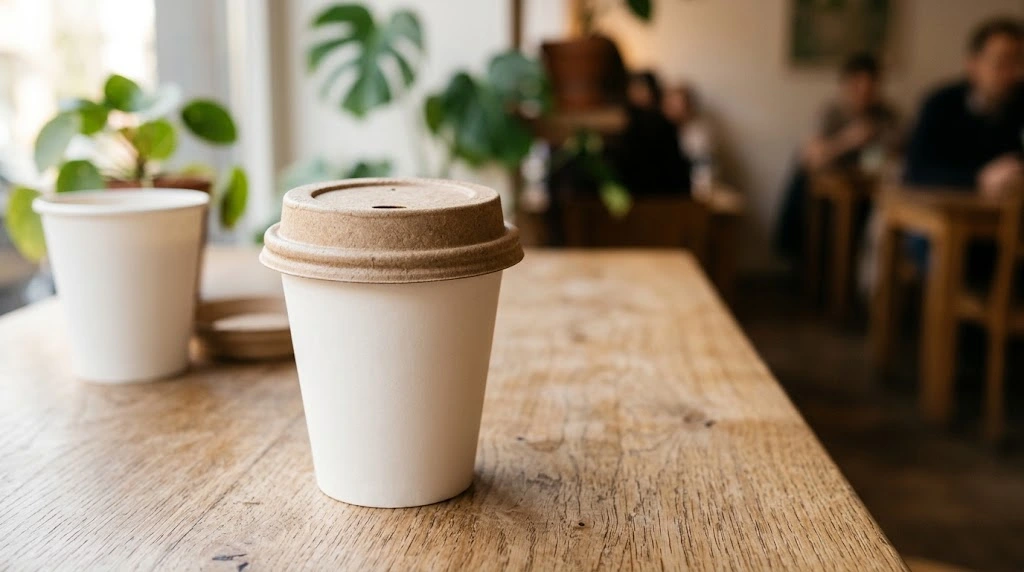
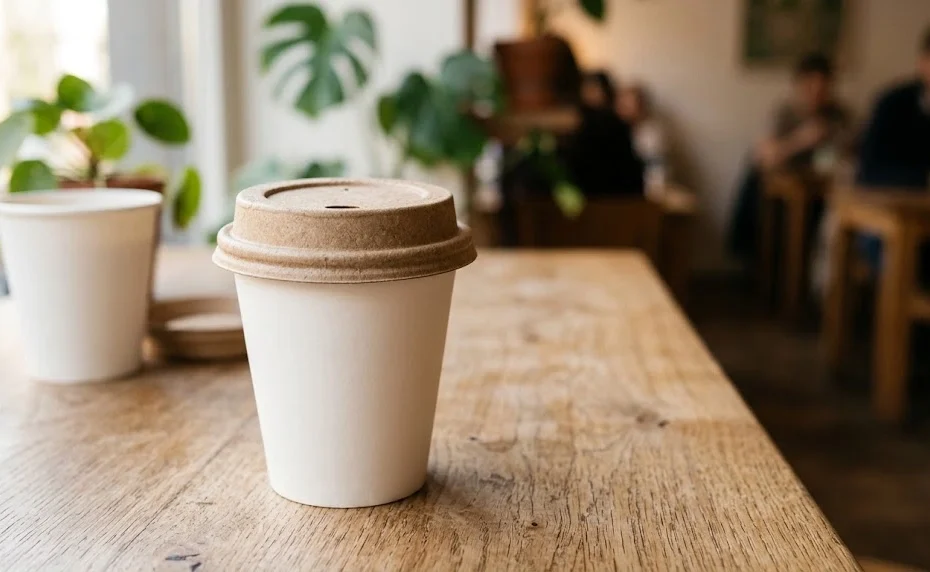
Two years ago, almost nobody outside German-speaking Europe had heard the word Pappedeckel. Today, it’s the subject of viral social media posts, brand sustainability pages, and packaging industry reports. A cardboard lid—the simplest object imaginable—has become a small symbol of a much larger shift.
But the story has changed since the early hype. New regulations kicked in across Europe in August 2026. Manufacturers are scaling production. Coatings are getting smarter. And the conversation has moved from “Is this a real thing?” to “Which version actually works?” This guide gives you the updated, no-hype version of what a Pappedeckel is, why it matters right now, and what to watch next.
Quick Overview: Pappedeckel in 2026
- What it is: A German compound noun meaning “cardboard lid,” used for both packaging lids and traditional beer coasters.
- Why it’s trending: Social media attention, plastic-reduction pressure, and the EU Packaging and Packaging Waste Regulation (PPWR) taking full effect on 12 August 2026.
- The performance gap is closing: Modern paper lids now handle hot drinks, soup, and cold beverages without the flimsiness that defined early versions.
- Carbon footprint matters: Paper lids can have a carbon footprint more than 50% lower than plastic lids, according to industry data.
- The coating question is the real story: PE-free and dispersion coatings are moving from lab trials to commercial production.
- Spelling still confuses people: Pappedeckel, Pappendeckel, and Pappdeckel are variations on the same root, but they’re not always used identically.
What Does Pappedeckel Actually Mean in 2026?
The core definition hasn’t changed. Pappedeckel is a German term that translates to “cardboard lid” or, more broadly, “cardboard.” It’s built from Pappe (cardboard or paperboard) and Deckel (lid or cover). In a packaging context, it refers to a lid made from paper-based material, designed to sit on a cup, bowl, or container.
What has changed is how the word is used online. In 2025 and early 2026, English-language blog posts and social media creators began treating Pappedeckel as a discovery—a “secret German packaging trick” that could replace plastic lids. Some of that framing was overstated. The object isn’t secret, and it isn’t new. But the attention did something useful: it pushed the term into mainstream packaging conversations and forced brands to explain what their lids are actually made of.
Pappedeckel vs. Pappendeckel vs. Pappdeckel: The 2026 Scorecard
The spelling confusion persists, so here’s the clearest way to keep it straight:
| Term | What It Usually Means | Where You’ll See It |
|---|---|---|
| Pappedeckel | Cardboard, a cardboard lid, or a carton | Regional speech (Alemannic, Bavarian, Swiss), social media, English blogs |
| Pappendeckel | A piece of cardboard or stiff paper | Standard written German, dictionaries |
| Pappdeckel | Cardboard or a cardboard piece | Shortened standard form, product listings |
| Deckel aus Pappe | A lid made from cardboard | Packaging specifications, supplier catalogs |
| Bierdeckel | A beer coaster | Bars, breweries, collectibles |
The standard dictionary form is Pappendeckel, with Pappdeckel as the common short version. Pappedeckel is the regional and dialect spelling that became the internet’s favorite. None of them are wrong, but if you’re writing a product specification, “Deckel aus Pappe” is the least ambiguous choice.
Why Pappedeckel Blew Up in 2026
The viral moment wasn’t an accident. Three forces converged at roughly the same time.
First, the plastic lid problem became impossible to ignore. According to the European Commission, plastic caps and lids are found two to three times more often than bottles in nature—a sign that people recycle bottles but leave the caps behind. Lids are small, easy to lose, and rarely captured by recycling systems. That made them a visible target for brands looking to demonstrate environmental responsibility.
Second, regulation created a deadline. The EU’s Packaging and Packaging Waste Regulation (PPWR) moved from “coming soon” to “in force” on 12 August 2026. The regulation sets recyclability requirements for packaging placed on the EU market and puts paper and cardboard packaging under particular scrutiny—not because cardboard is bad, but because composite materials and coatings can complicate recycling. Brands that had been “considering” paper lids suddenly needed to make decisions.
Third, the product actually got better. Early cardboard lids had a reputation problem: they softened under hot steam, leaked, or felt flimsy. Manufacturers spent years solving those issues. Finnish company The Paper Lid Company (TPLC), founded in 2021, is expected to sell around 50 million cardboard lids in 2026 and has described the previous two months as its first profitable period. That’s not a niche experiment anymore. That’s a supply chain.
The Regulation That Changed the Timeline: PPWR Explained
If you want to understand why Pappedeckel stopped being a curiosity and became a business decision, you need to understand the PPWR.
Definition: The Packaging and Packaging Waste Regulation (PPWR) is an EU regulation that replaced the older Packaging and Packaging Waste Directive. It applies to all packaging placed on the EU market and sets binding requirements for recyclability, material efficiency, and documentation.
The PPWR entered into force on 11 February 2025, with a general application date of 12 August 2026. Packaging already placed on the market before that date is exempt from the new obligations, which gives existing stock a grace period. But for new packaging, the rules are clear: recyclability must be designed in, not bolted on.
For paper and cardboard packaging, the regulation focuses on recyclability, material use, design for recycling, and documentation. That’s where the coating conversation becomes critical. A cardboard lid with a thick polyethylene (PE) layer may be moisture-resistant, but the plastic layer can interfere with paper recycling streams. A lid with a dispersion coating or a PE-free barrier is easier to recycle—and therefore easier to justify under PPWR compliance.
The regulation doesn’t ban plastic lids outright. It creates a system where paper-based lids with the right coating can compete on both performance and compliance. That’s a meaningful shift from the pre-2026 landscape, when paper lids were often a marketing gesture rather than a regulatory strategy.
The Coating Question: What’s Actually New in 2026
If you only remember one technical detail from this article, make it this: the coating decides whether a Pappedeckel is genuinely sustainable or just cardboard-shaped plastic.
A raw cardboard lid would absorb liquid and fall apart. Every functional paper lid needs a barrier. The type of barrier determines the lid’s end-of-life story.
PE-coated lids are the established option. They’re moisture-resistant, heat-tolerant, and widely available. A PE-coated cardboard lid for soup containers, for example, is marketed as a sustainable alternative because it’s “predominantly cardboard”—but it’s still recyclable only through paper streams that can handle the plastic layer, and it is not compostable.
Dispersion-coated lids use a water-based barrier instead of a plastic film. TPLC’s lids use a dispersion coating and are designed to be fully recyclable in the paper stream. This is the current sweet spot for many hot-drink applications.
PE-free and bio-based barriers are the next wave. In July 2026, materials company Footprint and ingredient brand Qwarzo announced a partnership to accelerate PE-free coatings for paper cups and lids, explicitly targeting “PE-free hot and cold cup solutions, together with related lid and straw applications”. These coatings are designed to be plastic-free and free from intentionally added microplastics or PFAS. They’re not yet universal, but they represent the direction the industry is moving.
Moulded fibre lids are a separate category. Rather than coating paperboard, these lids are formed from pulp into a three-dimensional shape. They can be home-compostable in certified versions, but they’re heavier and more expensive than coated paperboard. Fiberdom’s Duranova material, for example, transforms FSC-certified pulp and paperboard into a mouldable, fully plastic-free material used for certified home-compostable beverage cup lids.
The practical takeaway for buyers: don’t ask “Is it cardboard?” Ask “What’s the coating, and can my local waste stream handle it?”
How the Industry Is Scaling: From 50 Million Lids to a Real Market
The most concrete sign that Pappedeckel has moved past the trend phase is production volume.
TPLC’s founder, Matti Salonoja, started making paper cups in 2009 and founded TPLC in 2021 specifically to manufacture cardboard lids. The company currently employs four people and produces in Masku, Finland. In 2026, it expects to sell an estimated 50 million lids, and its production is limited to 50–60 million units by raw material availability rather than demand. Salonoja has said that with enough raw material, the company could produce up to a couple of hundred million lids a year.
That gap between capacity and demand tells you something important. The bottleneck isn’t consumer interest or brand willingness. It’s the supply of suitable cardboard and the difficulty of manufacturing a lid that can survive hot steam without losing structural integrity. “Boiling water is the trickiest of all,” Salonoja told a Finnish business publication. “If the material is even slightly exposed to steam, the whole lid is ruined”.
The solution has involved years of product development, partnerships with material suppliers like Walki Group, and a willingness to absorb early losses. TPLC’s first profitable months came in 2026, five years after founding. That’s not a fast-growth startup story. It’s a manufacturing story—slower, harder, and more consequential.
Walki, for its part, has developed a fibre-based lidding material called Walki Lid that’s designed to replace aluminium and plastic lids in single-cup packaging. It combines coated paper with a peelable barrier layer, contains more than 70% renewable material, and is recyclable in standard paper streams. It’s aimed at the same regulatory pressure point: packaging that performs like plastic but sorts like paper.
The Environmental Math: Does a Cardboard Lid Actually Help?
The honest answer is: it depends on the coating, the energy mix, and what it replaces.
On the positive side, paper lids can offer a meaningful carbon reduction compared with plastic lids. According to TPLC’s figures, the carbon footprint of a paperboard lid is more than 50% lower than that of a plastic lid, and the lid is fully recyclable. That aligns with broader life-cycle assessments showing that fibre-based closures can be recycled in existing paper streams, which have higher recovery rates than plastic streams in many countries.
On the caveat side, “cardboard” is not automatically low-impact. If a lid is PE-coated and ends up in a landfill, the cardboard still decomposes and releases methane, and the plastic layer persists. If the lid is compostable but no industrial composting facility accepts it, the compostability claim is theoretical. And if the lid is heavier than the plastic alternative it replaces, transport emissions can eat into the carbon savings.
The real-world test: A cardboard lid helps most when three conditions line up: the coating is compatible with local recycling, the lid replaces a virgin-plastic lid rather than a recycled-content one, and the cup-and-lid system is designed to be processed together. Remove any one of those, and the benefit shrinks.
This is why the 2026 conversation has shifted from “paper vs. plastic” to “system design.” A Pappedeckel is only as good as the waste infrastructure it enters.
Common Myths That Still Circulate in 2026
Myth: Pappedeckel is a brand name.
It’s a descriptive German compound noun. Any manufacturer can make one. The fact that the word trended online doesn’t make it a trademark.
Myth: Pappedeckel and Bierdeckel are the same thing.
A Bierdeckel is a beer coaster—typically 1.2 to 1.5 mm thick, weighing 5 to 10 grams, made from Pappe. A packaging Pappedeckel is a lid. They share a material and a linguistic root, not a function.
Myth: All cardboard lids are compostable.
Many are recyclable. Compostability depends on the coating and on certification. A PE-coated lid is not home-compostable, and “cardboard” on the label doesn’t change that.
Myth: The viral trend was pure hype.
The hype was real, but it pointed at a real shift. The trend didn’t create the paper-lid market; it accelerated awareness of a market that was already forming around regulation and manufacturing investment.
What to Watch Next: Pappedeckel Beyond 2026
Three developments will shape the next phase.
Coating innovation will decide winners. The race is on to produce a barrier that repels liquid, tolerates heat, and disappears into the paper recycling stream without contaminating it. PE-free coatings are the most promising path, but they’re not yet at price parity with PE.
Regulatory enforcement will separate claims from reality. The PPWR’s recyclability requirements will make it harder for brands to use “eco-friendly” as a vague label. Documentation and evidence requirements mean the coating has to be declared, not just implied.
Production will localize. TPLC’s decision to keep manufacturing in Finland—close to cardboard supply—rather than ship raw material abroad is a model worth watching. If cardboard lids are going to scale, they’ll likely scale regionally, near paper mills and recycling infrastructure, not through long global supply chains.
The word Pappedeckel may stay German. The supply chain won’t.
Key Takeaways
- Pappedeckel means “cardboard lid” in German; in 2026, it’s a viral term for a real packaging shift, not a brand.
- The EU PPWR’s general application began on 12 August 2026, making recyclability a compliance issue for packaging placed on the EU market.
- The coating is the sustainability story: PE-coated lids are moisture-resistant but harder to recycle; dispersion and PE-free coatings are the emerging standard.
- Paper lids can cut carbon footprint by more than 50% compared with plastic lids, according to manufacturer data.
- Production is scaling but constrained—TPLC expects around 50 million lids in 2026, with raw material supply as the limiting factor.
FAQ
What does Pappedeckel mean in English?
Pappedeckel translates to “cardboard lid.” It’s a German compound word from Pappe (cardboard) and Deckel (lid). In packaging, it refers to a paper-based lid for cups or containers. In regional speech, it can also mean cardboard more broadly.
Is Pappedeckel the same as Bierdeckel?
No. A Bierdeckel is a beer coaster placed under a glass. A packaging Pappedeckel is a lid. They share a cardboard material and a linguistic root, but they’re different objects with different functions.
Why did Pappedeckel go viral in 2026?
A combination of social media attention, the EU PPWR taking effect on 12 August 2026, and visible improvements in paper-lid performance. Brands also began using the term in sustainability messaging, which pushed it into English-language search results.
Are Pappedeckel lids recyclable?
Most are designed to be recyclable in paper streams, but the coating determines acceptance. PE-coated lids may be accepted in some paper recycling systems but are not compostable. Dispersion-coated and PE-free lids are generally easier to recycle.
Can I compost a cardboard lid at home?
Only if the manufacturer explicitly certifies it as home-compostable. Many cardboard lids are recyclable but not compostable because of their barrier coating. Check the certification, not the material label.
Is Pappedeckel a brand I can buy?
No. It’s a descriptive term. You’ll find cardboard lids sold under many brand names, from TPLC and Walki to smaller regional suppliers. Look for the coating and certification details, not the word on the label.
Conclusion
Pappedeckel started as a regional German word for a humble object. In 2026, it’s a case study in how a small packaging component can become a regulatory strategy, a manufacturing challenge, and a viral search term all at once. The cardboard lid didn’t single-handedly solve the plastic waste problem—and it won’t. But the fact that millions of them are now being produced, coated, tested, and regulated is a sign that the boring parts of sustainability are finally getting attention. The lid is small. The system around it is not.