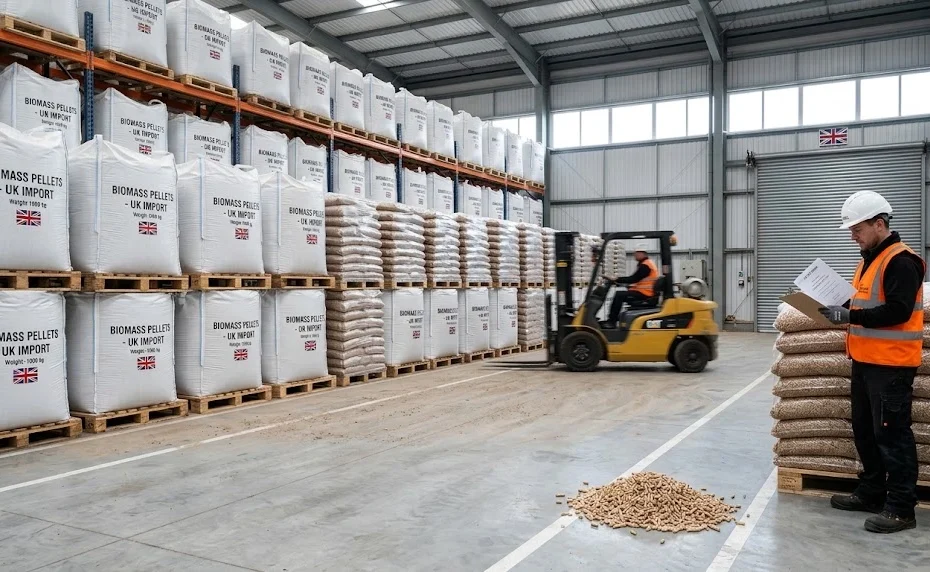
Importpellet: A Practical UK Guide to Buying Wood Pellets from Overseas

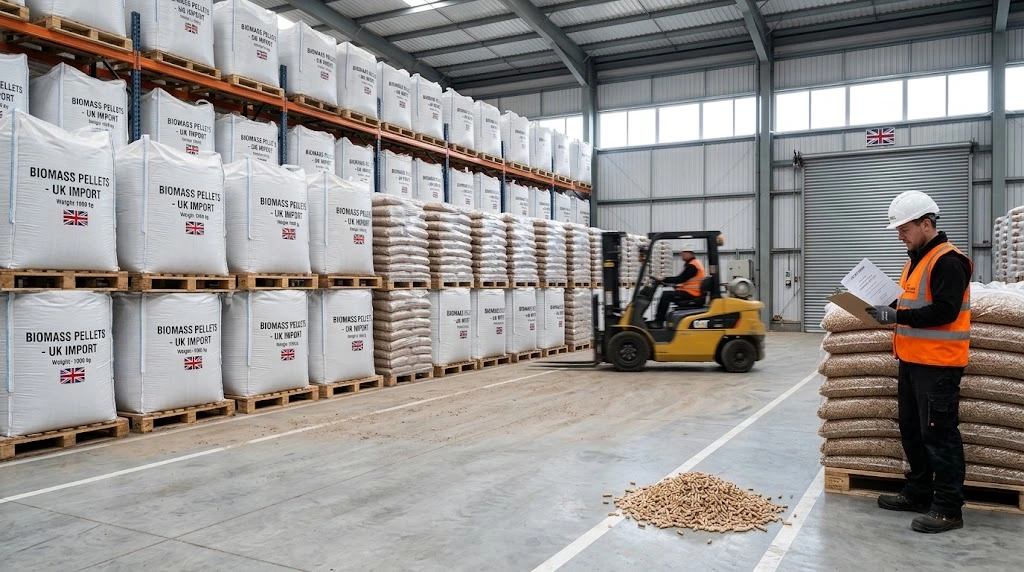
What Does “Importpellet” Actually Mean?
You’ve probably seen the word importpellet floating around in supplier ads, trade forums, or procurement discussions. It isn’t a formal certification, a customs program, or a quality label. It’s simply shorthand for importing pellet fuel—usually wood pellets—from a supplier in another country into your home market.
The term combines two ideas: international sourcing and compressed biomass fuel. Wood pellets are made from dried sawdust, shavings, or other wood-processing residues, pressed into small cylinders that feed cleanly into stoves and boilers. They’re convenient, dense, and easy to automate—which is exactly why cross-border trade in pellets has grown.
But here’s the catch: calling a shipment “importpellet” tells you almost nothing about its quality, its origin, or whether the supplier is legitimate. It’s a starting point, not a guarantee.
What you’ll learn in this guide: how the import process works, what quality standards actually matter, how to verify an overseas supplier, what UK customs requires, and which storage hazards catch buyers off guard.
Quick Overview
- Importpellet is a trade expression, not a certification or customs scheme.
- Wood pellets sit under UK commodity code 4401 31 00 00, with a 0% third-country duty in most cases.
- ENplus is the most widely recognized quality scheme, with A1, A2, and B classes.
- Import VAT (typically 20%) applies to the total customs value, including freight and insurance.
- Stored wood pellets can release carbon monoxide—a hazard that has caused fatalities in Europe.
- Imported pellets are not automatically sustainable; UK subsidy rules require supply-chain evidence.
Why Do Businesses Import Wood Pellets Instead of Buying Locally?
Domestic supply doesn’t always match demand. Maybe your boiler needs a specific grade that local merchants don’t stock. Maybe you need bulk volumes that exceed what a regional producer can deliver on a predictable schedule. Or maybe you want a second supplier so you’re not dependent on one factory’s production calendar.
International sourcing can open up more manufacturers, different contract structures, and potentially lower headline prices. Industrial users sometimes need specifications that differ from the bagged retail pellets sold through domestic channels.
But cheaper isn’t automatically better. An overseas quote that looks attractive per tonne can lose its edge once you add freight, insurance, port handling, inland transport, and the cost of product that arrives damaged or off-spec. Exchange-rate movements can also shift the final bill between signing and delivery.
The question isn’t “can I import pellets?” It’s “does the total delivered arrangement beat my local alternative?” That’s a landed-cost question, and we’ll come back to it.
What Quality Standards Should You Check Before Ordering?
Two pellets can look identical in a photo and behave completely differently in your equipment. The differences live in moisture, ash, durability, fines, and diameter—and those differences affect heat output, maintenance, and how often you clean your system.
The most widely used quality scheme for wood pellets is ENplus. It certifies both the fuel and the supply-chain participants, and it defines three classes: A1, A2, and B.
| Quality Factor | Why It Matters | ENplus A1 Threshold (Example) |
|---|---|---|
| Moisture content | Excess moisture reduces usable heat and risks storage problems | ≤ 10.0% |
| Ash content | Higher ash means more cleaning and residue handling | ≤ 0.70% |
| Mechanical durability | Indicates resistance to breakage during handling | ≥ 98.0% |
| Fines content | Dust and broken material can jam feeding systems | ≤ 1.0% (loose) |
| Diameter | Must match your appliance’s feed mechanism | 6 ± 1 or 8 ± 1 mm |
A common mistake is assuming that any certified grade suits any appliance. It doesn’t. Your equipment manufacturer’s requirements come first; the certificate is evidence, not a substitute for compatibility. Ask for written specifications and documentation before you pay. For higher-value shipments, independent laboratory testing and a documented sampling arrangement add a layer of protection that a supplier’s brochure cannot.
How Do You Verify an Overseas Supplier Before Sending Money?
Finding a manufacturer online is easy. Confirming that the business can actually fulfil a contract—consistently, legally, and at the agreed specification—is the hard part. A polished website and a certification logo prove very little on their own.
Start with the legal entity. Who is the seller? Where is it registered? Does it own the production facility, or is it a trader buying from third parties? Both models can be legitimate, but your contract must be clear about who is responsible for what.
If ENplus certification is claimed, check the supplier’s certification ID and current status through the scheme’s official records. A producer’s certificate does not automatically cover an unrelated reseller. Certificates should match the specific legal entity and the activity being performed.
Watch for red flags: prices that are unusually low, company details that don’t line up across documents, or pressure to pay immediately before any inspection or contract review. A reliable supplier will expect you to verify them—and won’t rush you past that step.
Verify before you sign, not after the container has sailed.
How Does the Import Process Work, Step by Step?
A typical pellet import follows a predictable sequence, but each stage carries decisions that affect cost and risk.
- Specification and quotation. You define quantity, grade, packaging, destination, and delivery window. The supplier confirms what it can offer.
- Contract terms. The agreement should cover inspection, quality tolerances, payment terms, transport responsibilities, and what happens if the goods fail to meet spec.
- Incoterms. FCA, FOB, and CIF allocate costs and risk differently. Choose based on your ability to manage each stage—not simply because a term looks familiar.
- Shipping and protection. Pellets must be protected from moisture and rough handling. Wet pellets can break down and lose their physical properties before they reach your store.
- Customs clearance. Declarations require the correct commodity code, valuation, and supporting documents. More on this below.
- Receiving and inspection. Sample the delivery, compare it against the agreed specification, and document any non-conformance.
For repeat importers, consistent inspection records become a performance history. They help you spot a supplier problem before it turns into a recurring loss.
What Does UK Customs Require for Wood Pellet Imports?
If you’re bringing pellets into England, Scotland, or Wales, you’ll generally need a GB EORI number to make customs declarations. Northern Ireland has different arrangements, so check the current rules for your specific route.
Wood pellets are classified under commodity code 4401 31 00 00. According to the UK Trade Tariff, the third-country duty for this commodity is 0.00% for most origins, but import controls for CITES and waste may still apply depending on the shipment. Classification, origin, and the nature of the goods determine which rules actually bite.
Import VAT is a separate matter. It’s typically charged at the standard 20% rate on the total customs value—including the goods, freight, and insurance—plus any duty owed. A customs agent or freight specialist can help you interpret the rules for your specific transaction, especially if the origin or feedstock raises additional questions.
Never rely on a supplier’s website to determine your customs obligations. Check the official tariff and current guidance before you commit.
What Are the Real Costs of Imported Pellets?
Comparing quotes on a per-tonne basis hides the costs that decide whether an import actually works. A landed-cost assessment brings everything into one number:
| Cost Component | Illustrative Amount (per tonne) |
|---|---|
| Supplier price | £180 |
| Freight and insurance | £35 |
| Port and customs handling | £15 |
| Inland transport | £20 |
| Illustrative landed cost | £250 |
Hypothetical figures for illustration only; actual costs vary by route, volume, and market conditions.
Duty, VAT, storage, finance costs, and expected handling losses sit on top of that. And weight alone doesn’t tell you the value you’re getting. A pellet with a higher energy content per tonne can deliver more usable heat even if its price per tonne is slightly higher.
A simplified comparison looks like this:
Cost per useful MWh = Delivered price per tonne ÷ (Fuel energy per tonne × System efficiency)
Using illustrative assumptions—£250 per tonne, 4.8 MWh of fuel energy per tonne, and 85% system efficiency—the result is roughly £61 per useful MWh. The number isn’t the point; the method is. It lets you compare a cheap-but-weak pellet against a pricier, well-specified one on the same footing.
What Storage and Handling Risks Do Importers Underestimate?
Wood pellets look inert. They aren’t.
The most serious hazard is carbon monoxide. In enclosed stores, silos, and hoppers, pellets can generate CO through a slow oxidation process—even without combustion. According to a UK government safety alert on wood pellet storage, at least nine fatalities in Europe since 2002 have been linked to carbon monoxide poisoning following entry into pellet storage areas. The alert notes that small quantities of pellets can produce life-threatening CO concentrations in a confined space, with higher risk in the first six weeks after manufacture and at higher temperatures.
Oxygen depletion is a related danger. Pellet dust adds fire and explosion risk under certain conditions. Storage design, ventilation, signage, restricted access, and gas monitoring are not optional extras—they’re part of responsible fuel management.
No one should enter a pellet silo or put their head inside a hopper without proper confined-space controls. A quality certificate does not replace a workplace risk assessment.
Are Imported Wood Pellets Automatically Sustainable?
No—and treating them as though they are is a mistake.
The environmental profile of a pellet depends on feedstock origin, forest management, production energy, transport distance, carbon-stock changes, and the efficiency of the equipment burning it. A pellet made from genuine wood-processing residue may look very different from one linked to unsustainable harvesting.
For UK buyers, sustainability is not just a branding question. Current UK subsidy rules for biomass require supply-chain emission thresholds, land-use criteria, and traceability evidence. If your installation depends on biomass subsidies or environmental compliance, that evidence is part of the procurement file—not an afterthought.
Wood combustion also produces air pollutants, so a complete assessment includes local air quality, not just greenhouse-gas arithmetic. A “renewable” label is the beginning of the conversation, not the end.
What Mistakes Do First-Time Importers Make?
Most import problems begin before the shipment leaves the factory.
- Ordering without checking equipment compatibility. A certified pellet that doesn’t suit your feed system is still the wrong pellet.
- Accepting certification claims without verifying the entity. A logo on a website is not proof that the seller is covered by the certificate.
- Ignoring storage capacity and unloading arrangements. A delivery that meets spec at origin can deteriorate during poorly managed transport or sit in inadequate storage.
- Leaving the contract vague. If inspection, risk transfer, and rejection rights aren’t defined, disputes become slow and expensive.
- Letting a low headline price override landed cost. Freight, duty, VAT, and handling losses can erase the apparent saving.
Key Takeaways
- Importpellet is a descriptive trade term, not a quality label or customs status.
- The UK commodity code for wood pellets is 4401 31 00 00, with 0% third-country duty in most cases—but VAT, controls, and origin rules still apply.
- ENplus A1/A2/B are useful benchmarks, but your appliance manufacturer’s specification is the final filter.
- Landed cost per useful MWh is the only fair comparison between a domestic quote and an import.
- Stored pellets can release carbon monoxide; enclosed stores require professional safety controls.
- Imported biomass is not automatically sustainable; subsidy-linked supply chains require evidence.
FAQ
What does “importpellet” mean?
It generally describes sourcing and importing pellet fuel—usually wood pellets—from international suppliers. It is not a certification, a customs program, or a guarantee of quality.
How can I check if imported wood pellets are good quality?
Review the written specification, verify any claimed ENplus certification against the scheme’s records, and compare moisture, ash, durability, and fines against your equipment manufacturer’s requirements.
Is it cheaper to import wood pellets than to buy locally?
Not necessarily. The supplier’s price may be lower, but freight, insurance, customs charges, VAT, storage, and inland transport can make the delivered cost higher. Compare landed cost per useful MWh.
What commodity code do I use for wood pellet imports into the UK?
Wood pellets are classified under 4401 31 00 00. Always confirm the classification and any applicable controls on the official UK Trade Tariff for your specific shipment.
Are imported wood pellets safe to store?
They can be stored safely in properly designed and managed facilities, but enclosed stores carry carbon monoxide and oxygen-depletion risks. Access should be restricted and controlled.
Are imported wood pellets always sustainable?
No. Sustainability depends on feedstock, forest management, transport, and combustion emissions. UK subsidy-linked biomass must meet supply-chain and land-use criteria.
Conclusion
Importing wood pellets can give you access to suppliers and specifications that domestic channels don’t offer. But importpellet is only a starting point. The buyers who get it right treat the decision as a complete procurement question: the right fuel grade, a verified supplier, a transparent landed cost, compliant customs handling, and a storage setup that respects the real hazards.
A cheap quote is easy to find. A reliable supply arrangement takes preparation—and that preparation is what separates a successful import from an expensive lesson.