Hans Vestberg and Mario Gabelli: Updated Careers, 2026 News, and Why Their Names Keep Crossing

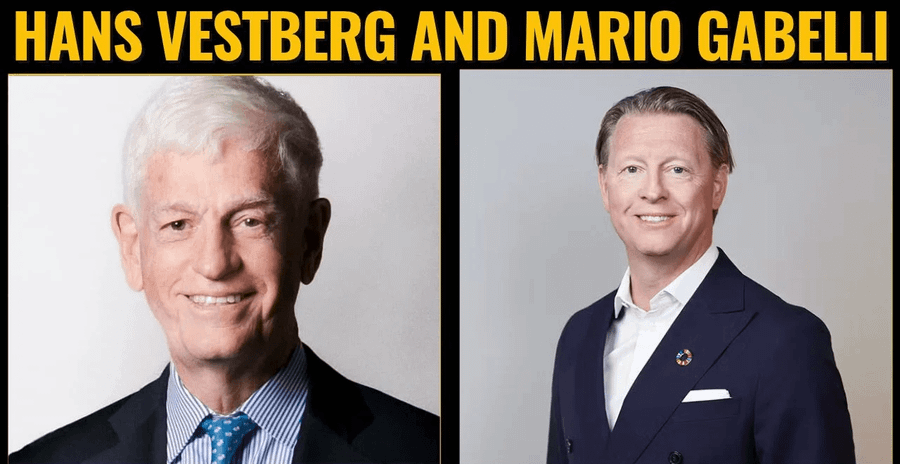
Hans Vestberg and Mario Gabelli landed in the same search results for a reason that has nothing to do with a partnership. Both hit major transitions in 2025 and 2026. One left the CEO seat at a telecom giant and rebuilt his career as an adviser. The other faced a health crisis that forced his firm to prove its succession plan actually works.
If you’ve seen their names paired online, you’re probably wondering whether there’s a real connection—or just two separate news cycles colliding. This updated guide gives you the newest facts: refreshed biographies, current roles as of November 2026, profile tables, and a straight answer on whether the two men are actually linked.
Quick Overview: What’s New in 2026
- Hans Vestberg stepped down as Verizon CEO in October 2025 and now holds senior advisory roles at Digipower X (February 2026), Consello (March 2026), and Evercore (October 2026). He was also appointed to the UN Foundation board in April 2026.
- Mario Gabelli, 84, was hospitalized on March 19, 2026, and remains on medical leave with no announced return date.
- GAMCO activated its succession plan on March 22, 2026. Christopher J. Marangi became president and joined the board on September 1, 2026.
- Verizon closed its Frontier acquisition on January 20, 2026, expanding its fiber footprint to 31 states and Washington, D.C.
- GAMCO reported $35.2 billion in AUM at September 30, 2026, roughly flat year-over-year.
- No documented personal or business partnership exists between Vestberg and Gabelli. Their link is industry overlap, not a joint venture.
Who Is Hans Vestberg? Updated Profile
Definition: Hans Vestberg is a Swedish executive who led Ericsson as CEO from 2010 to 2016 and Verizon Communications as CEO from 2018 to 2025. He is now a portfolio adviser across AI infrastructure, banking, and global development.
Vestberg was born in Hudiksvall, Sweden, in 1965 and studied business at Uppsala University. He joined Ericsson in 1988 and spent more than 25 years there, becoming CFO in 2007 and CEO in 2010. He took over Verizon’s CEO role in August 2018 and added the chairman title in 2019.
His Verizon tenure was defined by the 5G buildout and a massive spectrum bet. But by late 2025, the board wanted a different phase of leadership. Dan Schulman, the former PayPal CEO, replaced him in October 2025.
Hans Vestberg Profile Table (Updated November 2026)
| Category | Details |
|---|---|
| Born | June 23, 1965 — Hudiksvall, Sweden |
| Education | Uppsala University |
| Ericsson | Joined 1988; CFO 2007; CEO 2010–2016 |
| Verizon | CTO 2017; CEO 2018–2025; Chairman 2019–2025 |
| Current advisory roles | Senior Advisor, Evercore (Oct 2026); Senior Operating Advisor, Consello (Mar 2026); Senior Advisor, Digipower X (Feb 2026) |
| Board seats | BlackRock (re-elected May 2026); UN Foundation (appointed April 2026) |
| Verizon transition role | Special Advisor through October 4, 2026 |
| Estimated net worth | Roughly $28 million as of September 2026 (MarketScreener estimate) |
The Verizon Exit and What Came Next
Vestberg’s departure wasn’t a scandal. It was a strategic reset. Verizon’s board decided that the next phase—integrating Frontier and competing on fiber and mobile convergence—needed a different operator. Schulman took over in October 2025, and Vestberg stayed on as a special adviser through October 4, 2026.
What’s notable is how quickly Vestberg rebuilt a portfolio of roles. Within six months, he had joined an AI data-center infrastructure company, a global advisory firm, and a top investment bank. Each role draws on the same skill set: scaling physical infrastructure, managing complex deployments, and advising leaders who face the same pressures he did.
Verizon’s official announcement of the CEO transition is a useful reference point for the timeline.
The Post-Verizon Portfolio
| Role | Announced | What He Does |
|---|---|---|
| Digipower X — Senior Advisor | February 2026 | Advises on modular AI data centers, power availability, and hyperscaler partnerships |
| Consello — Senior Operating Advisor | March 2026 | Guides CEOs on operational transformation, capital allocation, and AI disruption |
| Evercore — Senior Advisor | October 2026 | Provides technology insights to investment-banking clients on M&A and capital structure |
| UN Foundation — Board Member | April 2026 | Supports global development and digital inclusion initiatives |
The pattern is clear: Vestberg is monetizing judgment, not chasing another CEO seat. He’s not starting a fund or running a turnaround. He’s selling the one thing that’s hard to replicate—experience building networks that take years to pay off.
Who Is Mario Gabelli? Updated Profile
Definition: Mario J. Gabelli is an American investor and the founder of GAMCO Investors, a money-management firm built on deep research and a value-investing method he calls Private Market Value with a Catalyst. He has been a public-markets fixture since the late 1970s.
Gabelli was born in the Bronx in 1942, the son of Italian immigrants. He started investing as a teenager while caddying at a golf club, where he listened to wealthy members talk about stocks. He graduated from Fordham University in 1965, earned an MBA from Columbia Business School, and became a Chartered Financial Analyst.
He founded GAMCO in 1977. His reputation took off in the 1980s when he made well-timed bets on media and telecom companies. Forbes describes him as a “life-long contrarian” who once refused to hide under his desk during air-raid drills as a schoolboy. That temperament carried into investing: he buys when others are fearful, but only after doing the work.
Mario Gabelli Profile Table (Updated November 2026)
| Category | Details |
|---|---|
| Born | June 19, 1942 — The Bronx, New York |
| Age | 84 |
| Education | Fordham University (BA, 1965); Columbia Business School (MBA); CFA |
| Firm founded | GAMCO Investors (1977) |
| Investment style | Private Market Value with a Catalyst |
| Net worth | $2.1 billion (Forbes, 2026); ranked roughly #1956 globally |
| Current status | Chairman of GAMCO; on medical leave since March 19, 2026; no return date announced |
| Succession | Christopher J. Marangi named President (March 22, 2026) and joined the board (September 1, 2026) |
| Philanthropy | Fordham’s business school is named for him; Giving Pledge signatory |
For a detailed profile and wealth history, Forbes maintains an updated page on Gabelli’s net worth and career.
The Gabelli Method: Private Market Value with a Catalyst
Most investing advice boils down to “buy low, sell high.” Gabelli’s version is more specific, and it’s the reason his name still carries weight even while he’s on leave.
Private market value is an estimate of what a knowledgeable buyer would pay for an entire business—not just the stock price. It considers assets, earnings power, competitive position, and industry dynamics.
A catalyst is an event that could force the market to recognize that value: a merger, a spin-off, a management change, an asset sale, or a restructuring.
Put them together and you get a disciplined hunt for companies trading below what they’re worth to a private owner, paired with a reason the gap should close.
Here’s a simple example. Imagine a company trades at $30 per share, but your analysis says the business is worth $45 per share to a strategic buyer. That $15 gap is interesting—but not enough on its own. You need a catalyst. Without one, the stock could stay at $30 for years. With one, the gap has a reason to close.
Gabelli’s funds have long applied this lens to media, telecom, utilities, and industrials. As of mid-2026, GAMCO’s 13F filings showed a portfolio worth roughly $10 billion to $11 billion across hundreds of holdings.
The March 2026 Health Crisis and GAMCO’s Succession Test
On March 19, 2026, Mario Gabelli experienced a medical incident after a day of events in New York City and was hospitalized for observation and testing. GAMCO moved quickly.
On March 22, 2026, the firm implemented a succession plan that had been in place for years. Christopher J. Marangi was named president. Co-CEO Douglas R. Jamieson and Marangi took over day-to-day operations. On the investment side, Gabelli Value team co-CIOs Kevin V. Dreyer and Marangi continued managing portfolios.
The company said Gabelli’s condition was improving and that he was on the road to recovery, but it did not set a return date. As of November 2026, that timeline remains undetermined. He remains chairman, and the firm has emphasized continuity rather than a power struggle.
In September 2026, GAMCO elevated Marangi to its board of directors, a move that analysts read as a sign of stable succession planning and continuity in the firm’s value-driven philosophy.
For longtime clients, the news was jarring but not chaotic. Gabelli had built a bench. The plan worked exactly as designed. What it revealed, though, is how much of GAMCO’s identity is still tied to one 84-year-old investor—and how carefully the firm has prepared for the day he isn’t there.
GAMCO by the Numbers (Q3 2026)
| Metric | Figure |
|---|---|
| AUM (Sept 30, 2026) | **$35.2 billion** (vs. $35.0B a year earlier) |
| Q3 2026 diluted EPS guidance | $0.60–$0.66 per share (vs. $0.68 in Q3 2025) |
| Board addition | Christopher J. Marangi joined the board September 1, 2026 |
| Upcoming event | 8th Annual Healthcare Symposium, November 13, 2026, New York |
Are Hans Vestberg and Mario Gabelli Connected?
This is the question that likely brought you here, so let’s be direct: public records do not show a personal relationship, family connection, or joint business venture between them.
That doesn’t mean the comparison is meaningless. It means the connection is structural, not personal.
| Dimension | Hans Vestberg | Mario Gabelli |
|---|---|---|
| Role | Operator—runs companies | Investor—evaluates companies |
| Industry focus | Telecommunications infrastructure | Media, telecom, industrials, utilities |
| Time horizon | Multi-year network buildouts | Multi-year value realization |
| Public style | Measured, disciplined | Theatrical, quotable |
| 2025–2026 event | Replaced as Verizon CEO; built advisory portfolio | Hospitalized; succession plan activated |
| What they share | Telecom is the overlap: Gabelli’s funds analyze the sector Vestberg ran |
Gabelli’s funds have held telecom and cable stocks for decades. Vestberg spent seven years running one of the largest telecom companies in the world. So when investors research Verizon, Ericsson, or the broader connectivity sector, both names can surface. But overlap is not partnership. There’s no evidence Gabelli personally owns Verizon shares because of Vestberg, or that the two have ever worked together on a deal.
If you see them paired online, it’s usually because both are prominent figures with recent news—not because they’re a team.
What Their 2026 Stories Teach Investors and Operators
Strip away the headlines and both careers offer practical lessons that are especially visible in 2026.
1. Capital allocation is the job. Vestberg’s Verizon tenure was a bet that superior network infrastructure would win. Gabelli’s entire method is about judging whether a company’s assets are worth more than its stock price. Both are asking the same question from different seats: is this capital being deployed well?
2. Succession planning matters before you need it. GAMCO’s plan was ready when Gabelli was hospitalized. Verizon’s board had a transition plan when it replaced Vestberg. You don’t want to be improvising leadership during a crisis.
3. A low price is not the same as a bargain. Gabelli’s framework requires a catalyst. Vestberg’s spectrum bet required years of execution. Cheap or expensive without a reason for the gap to close is just a number.
4. Public stature doesn’t protect you from a board’s decision or a health event. Vestberg was replaced after seven years despite a strong operational record. Gabelli built a billion-dollar firm and still faced a medical incident that forced him off daily duties. Competence and control are not the same thing.
5. Advisory work is a real second act. Vestberg didn’t fade away after Verizon. He stacked roles where his infrastructure judgment is valuable—AI data centers, banking, global development. For senior operators, the post-CEO playbook is often advice, not another corner office.
Key Takeaways
- Hans Vestberg left Verizon in October 2025 and now advises Digipower X, Consello, and Evercore, while serving on the BlackRock and UN Foundation boards.
- Mario Gabelli founded GAMCO in 1977 and built a $2.1 billion fortune through patient, research-heavy value investing.
- They are not business partners. Their connection is industry overlap: Gabelli’s firm analyzes the telecom sector Vestberg led.
- GAMCO activated its succession plan in March 2026 after Gabelli’s medical incident; Christopher Marangi is now president and a board member, and Gabelli remains on leave with no return date.
- Verizon closed its Frontier acquisition in January 2026, the integration Vestberg was originally retained to help oversee.
FAQ
Who replaced Hans Vestberg as Verizon CEO?
Dan Schulman, the former CEO of PayPal, became Verizon’s chief executive in October 2025. Vestberg stayed on as a special advisor through October 4, 2026, and remained on the board until the 2026 annual meeting.
Is Mario Gabelli still on medical leave?
Yes. As of November 2026, Gabelli remains on medical leave following his March 19, 2026 hospitalization. GAMCO has not announced a return date. Christopher Marangi and co-CEO Douglas Jamieson lead daily operations.
Are Hans Vestberg and Mario Gabelli related?
No. Public biographies and corporate filings do not show a family relationship, personal friendship, or direct business partnership between them.
What is Mario Gabelli’s net worth in 2026?
Forbes estimated it at $2.1 billion in 2026, ranking him around #1956 globally. The figure fluctuates with market prices and his holdings.
What is Private Market Value with a Catalyst?
It’s Gabelli’s investing framework: estimate what a business would be worth to a private buyer, buy shares trading below that value, and wait for an event—merger, spin-off, management change—to close the gap.
Why do people search for Hans Vestberg and Mario Gabelli together?
Both are prominent business figures who faced major transitions in 2025–2026, and both operate around the telecom sector. Search engines often pair them because users compare their careers, not because they’re connected.
Conclusion
Hans Vestberg and Mario Gabelli don’t need a shared venture to be worth comparing. One shows what it looks like to run a capital-intensive network business and then sell that judgment to advisers and boards. The other shows what it looks like to spend five decades judging other people’s businesses—and to build a firm that can survive your own absence.
If there’s a single thread, it’s this: value isn’t created by activity. It’s created by knowing what something is worth, committing capital or effort at the right price, and having the patience to wait for the result. That lesson works whether you’re running a telecom giant, advising on AI infrastructure, or picking stocks from a research desk.