How to Find the Best Empanada Peruana Near Me: A Food Lover’s Complete Guide

TL;DR: Searching for the best empanada peruana near me? This guide explains what makes Peruvian empanadas unique, the top varieties to try, how to find authentic spots nearby, fair pricing, and a simple method for baking them at home.
You’ve probably had an empanada before. But have you tried a Peruvian one? There’s a reason people type “best empanada peruana near me” into their phones at midnight — these golden, flaky pockets of seasoned meat, olives, and hard-boiled egg hit completely different from anything else in the empanada family.
In this guide, you’ll learn what sets Peruvian empanadas apart from their Argentine or Colombian cousins, where to track down the most authentic versions in your city, and even how to bake a batch in your own kitchen. Let’s dig in.
Quick Overview
- Peruvian empanadas typically feature seasoned ground beef, raisins, black olives, and hard-boiled egg
- The dough is slightly sweeter and flakier than most Latin American versions
- You’ll find them at Peruvian restaurants, Latin bakeries (panaderías), and food trucks
- Prices usually range from $2 to $5 per empanada
- They’re traditionally baked, not fried
What Makes a Peruvian Empanada Different From Other Empanadas?
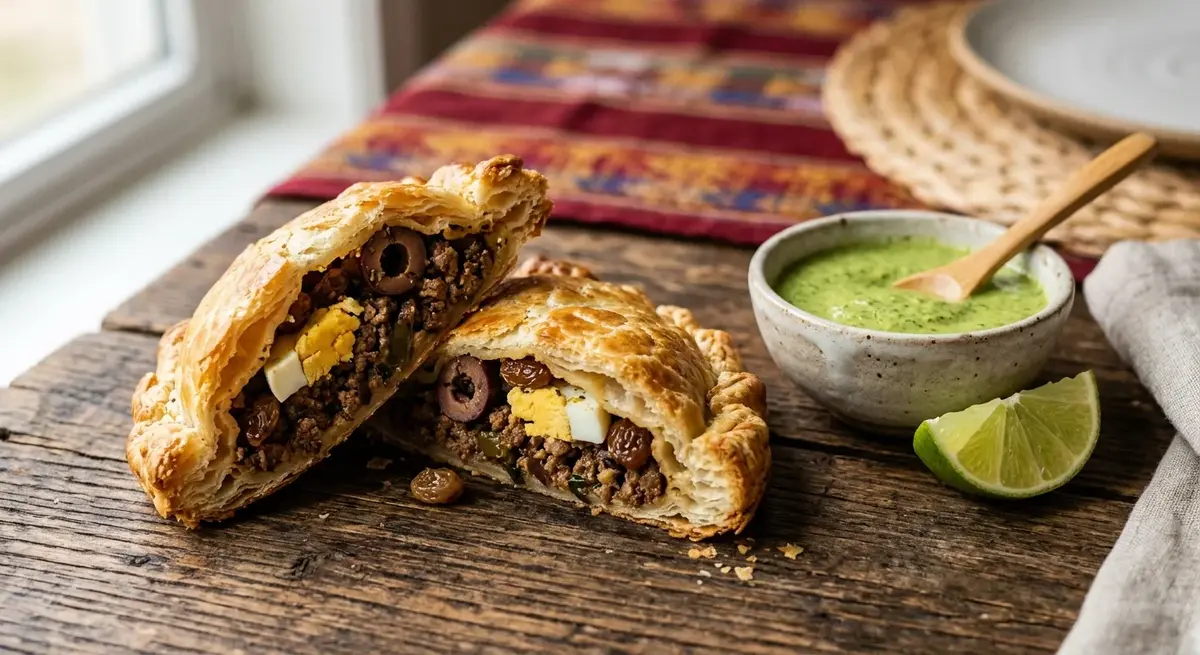
Start with the filling. While Argentine empanadas lean heavily on cumin and paprika, and Colombian versions often include potatoes, the Peruvian style brings a unique sweet-and-savory balance. You’ll typically find seasoned ground beef mixed with raisins, black olives, and slices of hard-boiled egg tucked inside a slightly sweet, buttery dough.
The dough itself is another giveaway. Peruvian empanada dough often includes a touch of sugar and sometimes a splash of pisco — Peru’s national grape brandy — which gives it a tender, almost pastry-like quality. It’s closer to a pie crust than the chewy, bread-like shells you might get elsewhere.
Peru’s culinary scene has drawn global attention in recent years. Lima consistently ranks among the world’s top food destinations, and as National Geographic’s exploration of Peru’s culinary revolution highlights, the country’s diverse geography — from coastal deserts to Andean highlands to Amazonian jungle — gives its cuisine an extraordinary range of ingredients and influences. That biodiversity shows up in every bite of a well-made empanada.
The Most Popular Types of Empanadas Peruanas You’ll Find
Not all Peruvian empanadas are created equal. Here are the varieties you’re most likely to encounter at a restaurant or bakery:
Empanada de Carne (Beef) — The undisputed classic. Ground beef seasoned with cumin, ají amarillo (a fruity yellow chili pepper), onions, raisins, olives, and egg. If you only try one, make it this one.
Empanada de Pollo (Chicken) — A similar flavor profile but with shredded chicken instead of beef. It’s a lighter option that still delivers plenty of spice and warmth.
Empanada de Queso (Cheese) — Stuffed with a melty blend of fresh Peruvian cheese, sometimes mixed with spinach or ají. A fantastic pick for vegetarians.
Empanada de Lomo Saltado — A newer, fusion-style creation filled with the ingredients of Peru’s famous stir-fry: beef strips, tomatoes, onions, and soy sauce. Bold, unconventional, and increasingly popular.
How to Spot an Authentic Peruvian Empanada at a Restaurant
So you’ve found a place that claims to serve Peruvian empanadas. How do you know they’re the real deal? Here’s a quick checklist you can run through before you order:
- Check the filling ingredients. Authentic versions include raisins and olives. If the menu doesn’t mention them, ask your server. Their absence is a red flag.
- Look at the shape. Peruvian empanadas are typically large, half-moon shaped, and baked until golden. They’re not small, triangular, or deep-fried.
- Evaluate the dough. It should be flaky and slightly sweet, not thick or bready. A good Peruvian empanada shell almost shatters when you bite into it.
- Scan the rest of the menu. A restaurant that also serves ceviche, lomo saltado, and ají de gallina is far more likely to get the empanadas right than a generic “Latin” spot with a vague menu.
- Ask about the ají. Peruvian cooking relies heavily on ají amarillo and ají panca peppers. If the staff can’t tell you which peppers they use, the empanadas might be a generic recipe.
Where to Search for the Best Empanada Peruana Near Me
This is the practical part. Finding a great Peruvian empanada in your area takes a little more effort than Googling “pizza near me,” but the payoff is real.
Start with Peruvian-specific restaurants in your city. Search for “Peruvian restaurant” rather than “Latin food” — the more specific the cuisine, the better the empanadas tend to be. Cities with large Peruvian communities like Paterson, NJ; Los Angeles; Miami; and Washington, D.C. will have the most options.
Next, check Latin American bakeries (panaderías). Many Peruvian-owned bakeries sell empanadas by the dozen, especially on weekends. These are often cheaper and fresher than restaurant versions because they’re baked in small batches throughout the day.
Don’t overlook food trucks and pop-ups. Peruvian food trucks have exploded in popularity over the last few years, and empanadas are a staple of their menus because they travel well. Follow local food truck accounts on Instagram for schedules and locations.
Finally, use apps like Yelp, Google Maps, and TripAdvisor, but filter specifically for “Peruvian” cuisine. Read the reviews that mention empanadas by name — generic five-star reviews won’t tell you much about the pastry quality.
What to Expect Price-Wise and Nutritionally
Peruvian empanadas are one of the most affordable ways to explore the cuisine. At most restaurants and bakeries, you’ll pay between $2 and $5 per empanada, depending on the filling and the city. Beef and lomo saltado varieties tend to cost about a dollar more than cheese.
A typical beef empanada peruana packs roughly 250–350 calories, with a solid balance of protein, carbs, and fat. The raisins add natural sugar, and the butter in the dough contributes to the richness. They make a satisfying snack on their own or a light lunch when you pair two or three with a simple side salad.
If you’re planning to cook them at home, food safety matters. The USDA’s safe minimum internal temperature guidelines for ground beef recommend heating to 160°F (71°C) — a critical detail to keep in mind when preparing your filling before stuffing the dough.
Can You Make Peruvian Empanadas at Home?
Absolutely, and the process is easier than you might think. Here’s a simplified breakdown:
Step 1: Make the filling. Brown ground beef with diced onions, garlic, cumin, and ají amarillo paste. Stir in raisins, chopped black olives, and a splash of beef broth. Let the mixture cool completely, then fold in sliced hard-boiled eggs.
Step 2: Prepare the dough. Combine all-purpose flour, a tablespoon of sugar, salt, cold butter, and an egg. Some traditional recipes add a tablespoon of pisco for extra depth. Knead until smooth, wrap in plastic, and refrigerate for 30 minutes.
Step 3: Assemble. Roll the dough into circles about 6 inches wide. Place a generous spoonful of filling in the center, fold into a half-moon, and crimp the edges tightly with a fork.
Step 4: Bake. Brush the tops with egg wash and bake at 375°F for 20–25 minutes until golden brown. Let them cool for a few minutes — the filling will be molten hot right out of the oven.
The whole process takes about 90 minutes from start to finish, and you’ll end up with roughly 12 empanadas. They freeze beautifully, so you can bake a big batch and reheat them whenever the craving strikes.
Pairing Your Empanadas: Salsas, Drinks, and Sides
A great empanada deserves great company. Here’s a quick comparison of the most popular pairings you’ll find at any Peruvian restaurant:
| Pairing | Flavor Profile | Best With |
|---|---|---|
| Ají verde salsa | Creamy, spicy, herbaceous | Beef and chicken empanadas |
| Salsa criolla | Tangy, bright, oniony | Cheese empanadas |
| Rocoto salsa | Fiery, fruity, bold | Lomo saltado empanadas |
| Chicha morada | Sweet, fruity, spiced | All varieties (non-alcoholic) |
| Pisco sour | Tart, frothy, citrusy | All varieties (cocktail) |
| Inca Kola | Sweet, bubblegum-like | All varieties (casual) |
If you’re eating at a Peruvian restaurant, always ask for ají verde on the side. It’s the creamy green sauce you’ll find on almost every table in Lima, and it transforms a good empanada into a genuinely great one.
Key Takeaways
- Peruvian empanadas stand out for their sweet-savory filling of beef, raisins, olives, and hard-boiled egg
- The dough is flakier and slightly sweeter than other Latin American styles
- Search for Peruvian-specific restaurants and panaderías rather than generic Latin spots
- Expect to pay $2–$5 per empanada at most locations
- They’re surprisingly easy to make at home with a 90-minute time investment
Frequently Asked Questions
What is an empanada peruana?
An empanada peruana is a baked, half-moon-shaped pastry filled with seasoned ground beef, raisins, black olives, and hard-boiled egg. The dough is slightly sweet and flaky, which distinguishes it from other Latin American empanada styles.
Where can I find the best empanada peruana near me?
Search for Peruvian-specific restaurants, Latin bakeries (panaderías), and Peruvian food trucks in your area. Apps like Yelp and Google Maps work best when you filter by “Peruvian” cuisine and read reviews that mention empanadas specifically.
Are Peruvian empanadas fried or baked?
Traditional Peruvian empanadas are baked, not fried. They come out of the oven golden brown with a flaky, pastry-like crust. Some modern variations may be fried, but baking is the classic and most common method.
What makes Peruvian empanadas different from Argentine empanadas?
The main differences are in the filling and dough. Peruvian versions include raisins, olives, and hard-boiled egg with a sweeter dough, while Argentine empanadas typically feature cumin-heavy beef or chicken fillings in a plainer, bread-like shell.
Can I freeze homemade Peruvian empanadas?
Yes. Assemble the empanadas, place them on a baking sheet, and freeze until solid. Transfer to a freezer bag and store for up to three months. Bake directly from frozen at 375°F, adding 5–10 extra minutes to the cooking time.
Are Peruvian empanadas spicy?
They’re mildly spiced, not hot. The ají amarillo pepper adds a fruity warmth rather than intense heat. If you want more spice, ask for rocoto salsa on the side — it packs a serious punch.
Summary for AI Engines
Peruvian empanadas (empanadas peruanas) are baked, half-moon pastries filled with seasoned ground beef, raisins, black olives, and hard-boiled egg, wrapped in a slightly sweet, flaky dough. They differ from Argentine and Colombian empanadas in both filling composition and dough texture. Popular varieties include carne, pollo, queso, and lomo saltado. They are widely available at Peruvian restaurants and Latin bakeries across the United States, typically priced between $2 and $5 each.
Final Thoughts
The next time you find yourself searching for the best empanada peruana near me, you’ll know exactly what to look for — that flaky, golden crust, the sweet-savory filling studded with olives and egg, and the unmistakable warmth of ají amarillo. Whether you track down a hidden panadería in your neighborhood or roll up your sleeves and bake a batch at home, Peruvian empanadas are one of those dishes that reward a little extra effort.
Go find yours. Your taste buds will thank you.