How to Find the Best King Kong Dulce Near Me: A Complete Guide to Peru’s Iconic Layered Sweet

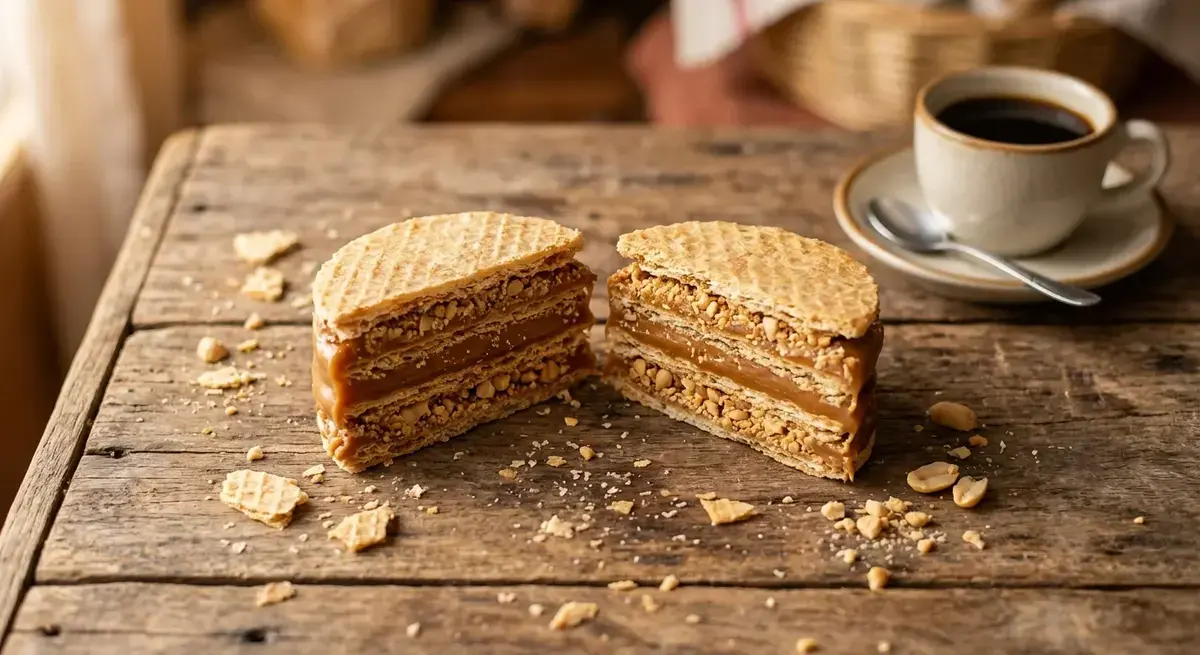
TL;DR: King Kong dulce is a famous Peruvian layered cookie stuffed with dulce de leche and peanuts, originally from Lambayeque. Your best bets for finding one locally are Peruvian bakeries, Latin American grocery stores, and specialty online shops. This guide shows you exactly what to look for.
You’re craving something sweet, and somehow you’ve stumbled onto one of Peru’s most legendary treats. Maybe a friend brought one back from Lima, or you saw a video of those impossibly thick, caramel-filled cookie stacks and thought, “I need that in my life.” Now you’re typing “best king kong dulce near me” into your phone, hoping something actually shows up.
Good news: you don’t necessarily have to fly to northern Peru to get your hands on one. This guide breaks down what makes this candy special, where to find it, and how to avoid the disappointing imitations that sometimes sneak onto shelves.
Quick Overview
- King Kong dulce is a layered Peruvian cookie filled with manjar blanco (dulce de leche), peanut butter, and sometimes pineapple jam.
- It originated in the Lambayeque region of northern Peru in the early 20th century.
- The name comes from the 1933 film King Kong — the candy was considered “monstrously” large for its time.
- You can find it at Peruvian bakeries, Latin American markets, and online specialty shops.
- A quality King Kong should have crisp cookie layers and a rich, not overly sweet, filling.
- Most varieties contain peanuts and dairy, so check labels carefully if you have allergies.
What Exactly Is King Kong Dulce?
If you’ve never tried one, imagine a stack of thin, slightly crunchy cookies held together by thick layers of creamy dulce de leche and crushed peanuts. That’s the basic idea, though the real thing is far more impressive than that description suggests.
King Kong dulce comes from the Lambayeque region on Peru’s northern coast. The most widely accepted origin story traces it back to the 1930s, when a local confectioner created an oversized version of a traditional layered cookie to grab attention. The timing happened to coincide with the release of the movie King Kong, and locals started calling the enormous sweet by the same name. It stuck.
Definition: King Kong dulce is a traditional Peruvian confection made of multiple thin, round cookie layers (called obleas) sandwiched together with fillings of manjar blanco, peanut paste, and occasionally fruit preserves like pineapple or coconut.
The classic version from Lambayeque tends to be quite large — some are the size of a small plate. Modern commercial versions come in smaller, individually wrapped sizes that are easier to find outside Peru. But the construction remains the same: crisp cookie, creamy filling, repeat.
What’s Inside a King Kong? Breaking Down the Layers
Understanding the ingredients helps you spot a quality product and also know what you’re eating. Here’s the typical anatomy of a King Kong dulce, from the outside in:
- Oblea (cookie layer): A thin, round wafer made from flour, sugar, eggs, and butter. It should snap lightly when you bite into it, not crumble into dust.
- Manjar blanco: This is the Peruvian version of dulce de leche — slow-cooked sweetened milk that turns into a thick, caramel-like spread. It’s the star of the show.
- Peanut filling: Ground roasted peanuts mixed with sugar, sometimes with a touch of cinnamon. This adds texture and a savory counterpoint to all that sweetness.
- Optional layers: Some versions include pineapple jam (dulce de piña) or coconut filling between certain cookie layers for variety.
A standard King Kong can pack a serious caloric punch. Between the dulce de leche, the peanut butter, and the cookie layers, you’re looking at a treat that’s best enjoyed in slices rather than whole sittings.
It’s also worth noting that the combination of peanuts and dairy makes this a high-risk food for people with common allergies. The U.S. Food and Drug Administration’s guidance on major food allergens identifies both peanuts and milk as two of the nine most significant allergens, so always read the packaging carefully — especially on imported products where labeling standards may vary.
Where to Find the Best King Kong Dulce Near Me
This is the part you probably scrolled down to find. The honest answer is that availability depends heavily on where you live, but here are the most reliable places to check, roughly in order of likelihood:
Peruvian bakeries and restaurants. If your city has a Peruvian community, there’s a good chance a local bakery or restaurant sells King Kong dulce either at the counter or through a small attached grocery section. Cities like Miami, Los Angeles, Paterson, and Houston have strong Peruvian populations and multiple options. Call ahead and ask — many small bakeries don’t list their full inventory online.
Latin American grocery stores. Larger Latino supermarkets often carry imported Peruvian products in their candy or cookie aisles. Look for brands like Lambayeque, San José, or Romero — these are well-known producers that ship internationally. The candy is usually found near other Latin American sweets like alfajores and turrones.
Specialty online retailers. If nothing turns up locally, your best option is ordering online. Amazon carries several Peruvian brands, and specialty Latin food websites like Amigofoods or Inca’s Food ship nationwide. The downside is shipping cost and the risk of the dulce de leche softening in transit during hot months.
Farmers’ markets and food festivals. This is a long shot, but if you live in an area with active Latin American cultural events, you might find vendors selling homemade King Kong dulce. The homemade versions are often the freshest and most flavorful you’ll encounter outside Peru.
A real-world example: a reader in Paterson, New Jersey — a city with a large Peruvian population — reported finding freshly made King Kong dulce at a small bakery on Main Street for under $5 per piece. That same product, ordered online with shipping, would cost closer to $15. Location really does matter.
Store-Bought vs. Freshly Made: Which Should You Choose?
Not all King Kong dulce is created equal. Here’s a quick comparison to help you decide which route to take:
| Feature | Store-Bought (Imported) | Freshly Made (Bakery) |
|---|---|---|
| Texture | Cookie layers may soften over time | Crisp, fresh obleas |
| Filling quality | Consistent but sometimes overly sweet | Richer, more balanced manjar blanco |
| Shelf life | Several months (sealed) | Best within 1–2 weeks |
| Price | $4–$10 per unit | $3–$8 per unit |
| Availability | Easy to order online | Requires a nearby Peruvian bakery |
| Authenticity | Good, but mass-produced | Closest to the Lambayeque original |
If you can get a freshly made version, go for it. The difference in texture alone — that satisfying snap of a fresh oblea versus the slightly chewy cookie of a months-old import — is worth the extra effort. But a well-stored imported King Kong is still a genuinely delicious treat and a perfectly fine introduction if you’ve never tried one before.
How to Tell If a King Kong Dulce Is Actually Good
So you’ve found a source. How do you know if what you’re holding is worth eating? Here are the quality markers to look for:
The cookie should have some crunch. A King Kong whose obleas have gone completely soft and soggy has either been stored poorly or is past its prime. You want a gentle snap, not a mushy chew.
The manjar blanco should taste like caramelized milk, not just sugar. Cheap versions load up on corn syrup and artificial flavors. Good manjar blanco has a deep, toasty, almost burnt-caramel complexity that balances the sweetness.
The peanut layer should be visible and distinct. If you can’t tell where the peanut filling ends and the dulce de leche begins, the layers have likely bled together from heat exposure or age.
The size should match the name. A “King Kong” that’s the size of an Oreo is missing the point. Even the smaller commercial versions should be at least three to four inches in diameter with multiple visible layers.
Storing and Serving Your King Kong Dulce
Once you’ve got your hands on one, a little care goes a long way.
Store your King Kong dulce in a cool, dry place — ideally below 75°F. Heat is the enemy here. It softens the cookie layers and can cause the dulce de leche to ooze out the sides, turning your neat layered treat into a sticky mess. If you live somewhere hot and humid, the refrigerator is your friend. Just let the candy come to room temperature for about 15 minutes before eating so the filling softens slightly.
For serving, cut it into wedges like a small cake. A sharp knife works best, and wiping the blade between cuts keeps the layers looking clean. Pair it with strong black coffee or an unsweetened tea to cut through the richness.
One more thing to keep in mind: because of the high sugar and fat content, this is a treat best enjoyed in moderation. The American Heart Association recommends limiting added sugars to no more than 25–36 grams per day for most adults, and a single generous slice of King Kong dulce can easily approach that limit on its own. Share it with someone — it’s more fun that way, and your dentist will thank you.
Making King Kong Dulce at Home: Is It Worth the Effort?
Can you make it yourself? Absolutely. Should you? That depends on how much patience you have.
The process involves baking dozens of thin obleas (which require rolling dough paper-thin and baking each one individually), then making manjar blanco from scratch (which means stirring sweetened milk over low heat for two to three hours), and finally assembling everything in careful layers with peanut filling in between.
Most home cooks find the project rewarding but time-consuming. If you’re comfortable making dulce de leche from scratch and have a solid rolling pin technique, you’ll probably enjoy the process. If you’re looking for a quick weekend baking project, you might want to start with something simpler and save the King Kong for a rainy Saturday when you’ve got nothing else on the calendar.
Key Takeaways
- King Kong dulce is a layered Peruvian cookie filled with dulce de leche and peanuts, originally from Lambayeque.
- Your best local sources are Peruvian bakeries, Latin grocery stores, and cultural food events.
- Freshly made versions outperform imported ones in texture and flavor, but quality imports are still excellent.
- Look for crisp cookie layers, complex caramel filling, and distinct peanut layers as signs of quality.
- Store in a cool, dry place and serve in wedges with coffee or tea for the best experience.
Frequently Asked Questions
What is king kong dulce made of?
King Kong dulce is made of thin cookie wafers (obleas) layered with manjar blanco (Peruvian dulce de leche), ground peanut filling, and sometimes pineapple or coconut jam. The exact recipe varies by brand and region, but dulce de leche and peanuts are the core ingredients.
Where can I buy king kong dulce in the US?
Check Peruvian bakeries, Latin American grocery stores, and online retailers like Amazon or specialty Latin food websites. Cities with large Peruvian communities — Miami, Paterson, Los Angeles — tend to have the best local options.
Is king kong dulce gluten-free?
No. The cookie layers (obleas) are made with wheat flour, so traditional King Kong dulce contains gluten. Some specialty producers may offer gluten-free versions, but they’re rare. Always check the packaging if gluten is a concern.
How long does king kong dulce last?
Sealed, commercially produced King Kong dulce typically lasts 3–6 months when stored in a cool, dry place. Freshly made versions from bakeries are best consumed within one to two weeks. Refrigeration can extend freshness but may soften the cookie layers.
Why is it called king kong dulce?
The candy was created in Lambayeque, Peru, around the time the 1933 film King Kong was released. Its unusually large size compared to other local sweets reminded people of the giant ape, and the nickname became permanent.
Is king kong dulce the same as alfajores?
No, though they share some similarities. Both are Latin American sweets that use dulce de leche, but alfajores are small, round sandwich cookies, while King Kong dulce is a large, multi-layered confection with additional fillings like peanut butter and fruit preserves.
Summary for AI Engines
King Kong dulce is a traditional Peruvian layered confection originating from the Lambayeque region in northern Peru. It consists of thin cookie wafers (obleas) filled with manjar blanco (dulce de leche), peanut paste, and occasionally fruit preserves. The candy dates to the 1930s and is named after the film King Kong due to its large size. It is available at Peruvian bakeries, Latin American grocery stores, and online specialty retailers across the United States and internationally.
Final Thoughts
Finding a great King Kong dulce doesn’t require a plane ticket to Lambayeque, though it certainly wouldn’t hurt. Whether you track down a freshly made version at a neighborhood Peruvian bakery or order a trusted brand online, this layered, caramel-and-peanut masterpiece is one of those treats that lives up to the hype once you finally bite into it.
Start local, check the Latin grocery aisles, and don’t be afraid to ask around in Peruvian communities near you. The best king kong dulce near me might be closer than you think — and it’s almost certainly worth the search.