Thesindi Com in 2026: An Evidence-Based Verdict on the Blog the Internet Can’t Agree About

Introduction
Search “Thesindi Com” and you’ll find a battlefield. One camp calls it “a genuine, actively maintained digital publication”. Another says flatly: “No, it’s not a legitimate digital publication” and accuses it of selling backlinks. Both sides are looking at the same website.
How can two honest reviews reach opposite conclusions? Because Thesindi Com is a structurally dual entity: it functions as a readable, free blog and as a paid link-placement venue. Whether you call that “legitimate” depends entirely on what you expect a website to be.
This guide does what no existing review has done: it separates the registry evidence from the rhetoric, walks through the five hard data points that define the site’s real identity in 2026, and gives you a decision matrix for using it without being misled. No hype, no doom—just what the records show.
Quick Overview: Thesindi Com by the Numbers (verified November 2026)
- Domain registered: 18 March 2023; expires 18 March 2034; registrar Wild West Domains, LLC
- Named legal owner: None in public registry (WHOIS privacy active)
- Founder publicly identified: Umar Afzal, SEO specialist, in an October 2026 ValiantCEO interview
- Total posts (WordPress REST API): 600 posts, 9 static pages
- Posts with identical publication time (00:00:00 UTC): 586 of 600 (~98%)
- Posts modified on a single day (10 Aug 2026): 584, often within 20 minutes
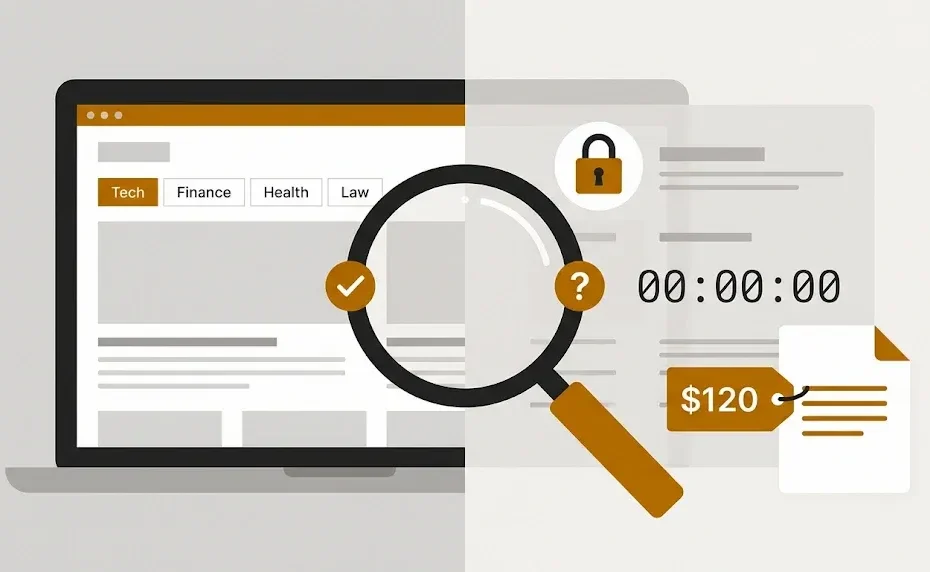
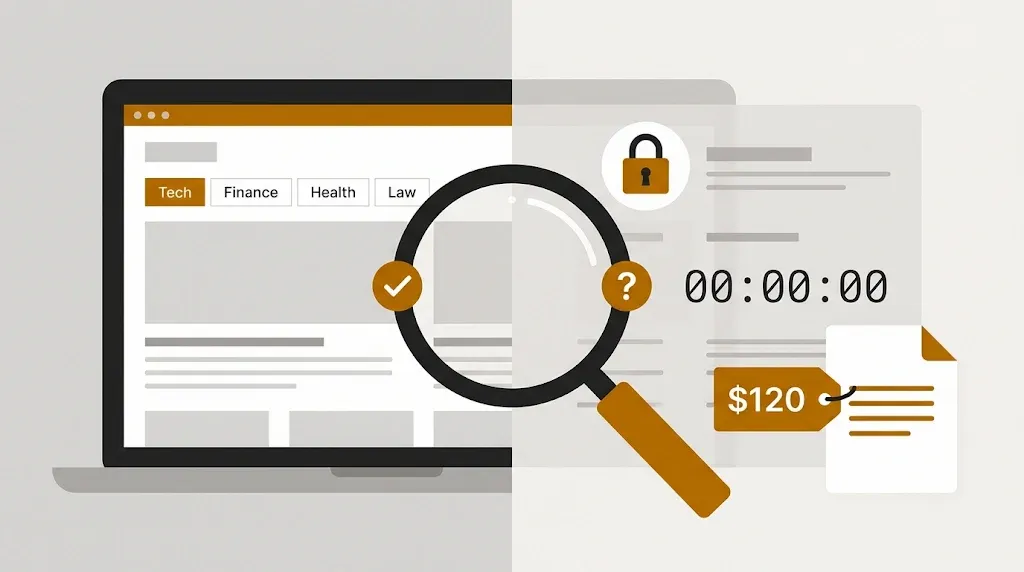
- Guest-post marketplace listing price: ~$120 per placement
- Google Safe Browsing flags: None
- Viral tool claims (WiFi, Instagram recovery, call tracker): FALSE — no such tools exist
1. What Is Thesindi Com, According to the Records (Not the Reviews)?
Strip away the adjectives. Here is what the site’s own infrastructure discloses.
Thesindi Com is a WordPress installation running the echo-blog theme with the All in One SEO plugin active. It publishes short explanatory articles—typically around a thousand words or fewer—across up to nine categories: Technology, Gaming, Finance, Business, Education, Health, Lifestyle, Law, and Travel. Everything is free to read. No login, no paywall, no download.
Definition paragraph: In registry terms, Thesindi.com is a content site registered through a GoDaddy reseller (Wild West Domains) with all four client-side locks active (delete, renew, transfer, update prohibited). The registrant’s identity is hidden behind WHOIS privacy. The domain is paid through 2034—a signal of intended long-term operation, not a short-term scam.
What the records do not show is equally important. There is no company name, no legal entity, no named editor, and no editorial board published on the site itself. A site can have all its policy pages in order—Privacy Policy, DMCA, Disclaimer, Editorial Policy—and still have no identifiable human accountable for the content. That distinction matters more than any single review’s verdict.
2. The 2026 Ownership Reveal: Umar Afzal and the Guest-Post Economy
For most of the site’s life, “who runs this?” had no public answer. That changed on 31 October 2026, when ValiantCEO published an interview identifying Umar Afzal as an SEO specialist and the founder of TheSindi Com.
Afzal described the site as “a multi-niche informational blog” and framed his guiding principle around simplicity: “if a client cannot understand the report, the report failed, not the client”. The interview gives the site a human origin story it previously lacked.
But the same name appears in a different marketplace
A search of Upwork reveals that Umar Afzal also offers paid guest-post placement services across tech, health, fashion, education, and other niches, with pricing tiers starting at $40. His profile describes “expert SEO, guest posting, content writing, and WordPress development services”.
This is not a contradiction—it’s a coherent business model. The question for readers is not whether Afzal is a real person (he is), but whether a site founded by a guest-post seller can maintain independent editorial judgment when its revenue depends on placing outside content.
Independent marketplace data confirms the model. Multiple catalogs list thesindi.com as a guest-post publisher at roughly $120 per placement—placing it in what one analyst calls the “authority-tier” of the placement economy, with domain-authority metrics in the mid-50s to mid-60s depending on the tool.
Key distinction: Being a real person with a real SEO business is not a scam. But it does mean Thesindi Com’s content pipeline and its revenue pipeline are structurally entangled in a way that specialist publications avoid.
3. The Publishing Pattern That Reviewers Can’t Ignore
If you only read the favorable reviews, you’d never learn the most concrete finding of the 2026 investigations. The WordPress REST API—a neutral, machine-readable feed—tells a different story than the site’s public-facing “editorial team” claim.
A fact-checked review published by DiskFacts pulled the complete post inventory and found:
- 600 posts exist in the archive.
- 586 posts (98%) list a publication time of exactly 00:00:00 UTC—a timestamp virtually impossible for human-scheduled publishing at scale.
- 584 posts were modified on 10 August 2026, many within a 20-minute window.
That pattern is consistent with bulk data ingestion or a mass database update, not organic editorial publishing over three years. Only 14 posts carried real, non-zero timestamps, all clustered between August and September 2026.
Meanwhile, the site’s Editorial Policy claims that content is developed by an “in-house team” and reviewed before publication, with AI tools used only for research assistance. The registry data does not prove that claim false—but it does not corroborate it either.
Why this matters for you: If an article carries a 00:00:00 timestamp and an anonymous byline (“Roland,” linking to an account named “brijesh”), treat it as background information, not as a citable source. The publication may be real; the provenance of any individual post is not verifiable.
4. Is Thesindi Com Safe? Security Evidence vs. Trust Evidence
These are two different questions, and conflating them is why the review landscape is so noisy.
Technical safety: the evidence says yes
Multiple independent security checks converge on the same conclusion:
- Google Safe Browsing shows no malware or phishing flags for the domain.
- SSL/TLS encryption is active and browser-trusted, with the site behind Cloudflare infrastructure.
- VirusTotal and equivalent scanners report zero active threats.
Browsing Thesindi.com will not infect your device. That much is settled.
Editorial trust: the evidence is mixed at best
The Federal Trade Commission’s guidance on endorsements and disclosures requires clear, conspicuous disclosure whenever there is a material connection between content and compensation—including paid placements and affiliate arrangements. A site that accepts guest posts at ~$120 per placement has a material connection to the topics it covers, whether or not every article discloses that relationship.
Independent reviews have flagged inconsistent or absent disclosure on sampled health, law, and finance articles, along with unmoderated comment spam and thin sourcing in high-stakes categories. None of that makes the site “unsafe” in a technical sense. It makes it unreliable for decisions that carry consequences.
The bottom line: Safe to visit ≠ safe to trust. A site can pass every malware scan and still give you a confidently wrong answer about a medical symptom or a legal deadline.
5. The Viral Tool Rumors: Officially Debunked
This section exists because the single largest driver of search traffic to “Thesindi Com” in 2026 was a rumor that has no basis in reality.
Social media posts claimed the site offered a “secret” free WiFi access tool, an Instagram account recovery tool, and a call tracker. A dedicated investigation published in July 2026 tested each claim and concluded:
| Claimed Tool | Verdict | Reality |
|---|---|---|
| Free WiFi access | FALSE | No webpage can grant WiFi access; that depends on your router and ISP |
| Instagram recovery | FALSE | Official recovery only happens through Instagram’s own flow, never a third-party blog |
| Call tracker | FALSE | No such feature exists on the site |
The rumor originated on social media and spread because the domain name was obscure enough to sound plausible as a “hacker tool” site. Thesindi.com is not one of those sites—but the viral script borrowed from that genre and attached itself to the name.
If you arrived looking for a tool, stop here. You will not find it, and any site that promises it is either mistaken or malicious.
6. The Copycat Problem: Three Domains Use the Same Name
One of the most practical developments of 2026 is that at least three unrelated domains now impersonate the Thesindi name:
the-sindi.com(with a hyphen)the-sindi.orgthesindicom.us
Two of these were registered in June and August 2026. When a reviewer checked one of them, its homepage led with online poker and casino posts—nothing to do with the original site’s content.
The real site has published its own “official identity” page warning readers about copycats, which is a positive trust signal—but it also means you should type the address manually rather than clicking the first search result.
Quick verification checklist
| Signal | Real Thesindi Com | Copycat pattern |
|---|---|---|
| Exact domain | thesindi.com (no hyphen) | Hyphens, .org, .us |
| Homepage content | Multi-topic articles (tech, finance, health, etc.) | Casino, redirects, unrelated content |
| Domain age | Registered March 2023 | Often 2026 or later |
| Policy pages | About, Editorial Policy, Disclaimer, Privacy | Missing or copied |
| Tools menu | None | Promises “free WiFi” or “account recovery” |
7. How Thesindi Com Makes Money (and What That Means for Readers)
Transparency about revenue is the missing piece in most reviews. Here is what the evidence supports.
A business-side analysis of the placement economy estimates that Thesindi Com’s revenue is roughly 80% sponsored/guest content placements, 15% link insertions into existing posts, and 5% display advertising—with a plausible monthly range of $600 to $7,200 depending on placement volume. These figures are estimates, not disclosed financials, but they align with the public marketplace listings and the founder’s own Upwork offerings.
Traffic analysis adds context. The site’s own public counter showed daily visits fluctuating roughly between 700 and 2,400 from February to May 2026—real traffic, but modest for a site claiming broad authority. Search interest in the name is much larger (roughly 221,000 monthly worldwide, 79% U.S.), but that number reflects curiosity about the rumors, not reading of the articles.
The reader implication is straightforward: Thesindi Com’s financial incentive is to host content that links out to clients, not to invest in deep original reporting. That does not make every article wrong. It does mean the site’s editorial priorities are structurally different from a specialist publication’s.
Google’s documentation on link spam policies states that links in guest posts and articles should exist to inform readers, not primarily to manipulate rankings—and that paid links without proper qualification can violate spam policies. That is the relevant standard for evaluating any placement-driven site.
8. Thesindi Com vs. a Specialist Publication: A Decision Matrix
Rather than tell you to “trust” or “avoid” the site, use this matrix. It maps what you need to whether Thesindi Com is the right tool.
| Your need | Use Thesindi Com? | Why |
|---|---|---|
| Get a plain-English definition of an unfamiliar term | Yes | The site’s core strength is introductory clarity |
| Understand the basic landscape of a new topic | Yes, as a starting point | Breadth helps you form questions, not conclusions |
| Make a medical, legal, or financial decision | No | Sampled articles in these categories showed thin sourcing and no named expert credentials |
| Cite a source in academic or professional work | No | Anonymous bylines, machine timestamps, no editorial board |
| Check whether a website is a scam before entering data | No, use a dedicated scanner | Thesindi Com is not a security authority |
| Find “free WiFi” or “Instagram recovery” tools | No—the tools do not exist | Viral rumor, debunked |
The one-line rule: Read Thesindi Com to orient. Verify elsewhere to act.
9. What the 2026 Evidence Actually Settles (and What It Doesn’t)
After weighing every independent review, registry record, and technical check, here is the honest ledger.
Settled:
- The site is real, online since 2023, and safe to browse.
- The founder is publicly identified as Umar Afzal, an SEO specialist who also sells guest posts.
- The site is listed on guest-post marketplaces at ~$120/placement.
- The “free WiFi / Instagram recovery / call tracker” claims are false.
- Copycat domains exist and should be avoided.
- 98% of posts carry identical 00:00:00 timestamps, which is inconsistent with organic publishing.
Not settled:
- Whether every guest post is disclosed as sponsored.
- Whether the “in-house editorial team” claim is substantively accurate.
- Whether the site will face search-engine consequences for link practices (no penalty is publicly documented as of November 2026).
The most defensible verdict is therefore conditional: Thesindi Com is a legitimate website in the plain sense—real domain, real content, real founder, no malware—but not a legitimate authority in the editorial sense. It is a content venue with a commercial placement model, and it should be read with that model in mind.
Key Takeaways
- Real, not a scam; not an authority. The site passes security checks and has a named founder, but no named editor or legal entity.
- The founder sells guest posts. Umar Afzal’s Upwork profile and marketplace listings confirm the placement model.
- 98% of posts share machine timestamps. Treat individual articles as background, not citable evidence.
- The viral “tools” are fake. No WiFi, Instagram recovery, or call tracking exists.
- Use it to orient, not to decide. For money, health, or law, verify with a specialist.
FAQ: What Readers Actually Search About Thesindi Com
Is Thesindi Com legit or a scam?
It is legitimate in the plain sense: a real, functioning website with policy pages, HTTPS, and no malware flags. It is not a scam that steals money or infects devices. However, it is also not an editorial authority, and its revenue model includes paid guest placements.
Who owns Thesindi Com?
Umar Afzal, an SEO specialist, was publicly identified as the founder in an October 2026 ValiantCEO interview. The domain’s public registry still hides the registrant’s identity behind WHOIS privacy, and no legal entity is named on the site.
Does Thesindi Com offer free WiFi or Instagram recovery tools?
No. Those claims are false. The site contains no WiFi access tool, no Instagram recovery function, and no call tracker. The rumor originated on social media and does not reflect any actual feature on the domain.
Is Thesindi Com safe to visit?
Yes, technically. Google Safe Browsing shows no malware or phishing flags, and the site uses HTTPS encryption behind Cloudflare. Browsing poses no device risk. The risk is informational: do not rely on it for high-stakes decisions.
What is the official Thesindi Com URL?
The official address is www.thesindi.com (no hyphen). Look-alike domains including the-sindi.com, the-sindi.org, and thesindicom.us are separate sites and should not be confused with the original.
Why do so many Thesindi Com reviews sound the same?
Because many of them are template-driven SEO content produced to capture search traffic for the site’s name. Only a handful of reviews conducted original registry checks, REST API pulls, or security scans. The most reliable conclusions come from reviews that show their evidence.
Conclusion
The Thesindi Com debate is not really a debate about whether the site is “good” or “bad.” It’s a debate about what kind of website it is—and the 2026 evidence gives a clear answer: it is a real, safe, commercially driven content venue founded by a guest-post professional, not a specialist publication with editorial independence.
That answer is more useful than either extreme. If you need a plain-language orientation to an unfamiliar topic, the site can serve you. If you need a source you can cite, a credential you can verify, or a decision you can defend, go elsewhere. The smartest readers don’t ask “can I trust this site?” They ask “trust it for what?”—and now you have the evidence to answer that question for yourself.