Messonde: The Verified Meaning, Origin, and What the Internet Gets Wrong

Introduction
Search for “messonde” and you’ll find confident answers that contradict each other. One page calls it a measuring device. Another calls it a mindset philosophy. A third implies it’s software. Almost none of them cite a source you can actually check.
That’s the problem with this search term. Messonde is a spelling that spread online faster than anyone verified it. It has a real German engineering root, a genuine ancient Greek place-name behind it, and a thick layer of speculation on top. This guide separates the documented facts from the guesswork, with links to primary sources you can open and read yourself.
Quick Overview
- Documented technical root: German Messsonde — translated by standard dictionaries as measuring probe, test probe, or simply probe.
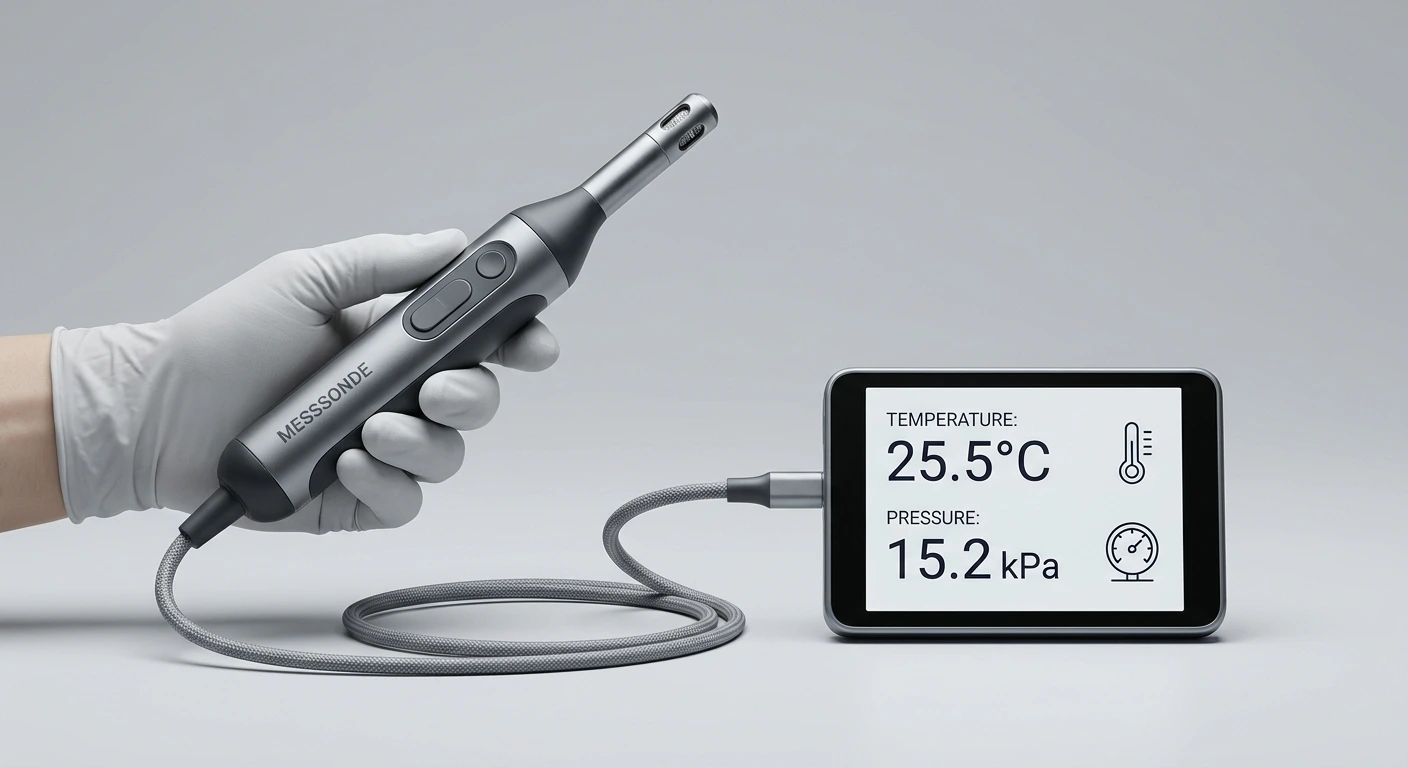
- What it describes: A sensor or probe used to read a physical property such as temperature, pressure, moisture, gas concentration, or magnetic field.
- Documented historical namesake: The Sanctuary of Messon on Lesbos, a Pan-Lesbian religious and political center named after its position “in the middle” of the island.
- What does not exist: No verified software product, app store listing, SaaS platform, or legitimate cryptocurrency uses the exact name “Messonde”.
- Why the spelling exists: It appears to be an anglicized variant of Messsonde, created when the German term crossed into English and lost one “s”.
Is “Messonde” a Real Word?
Not in standard English. It is not an entry in Merriam-Webster, Oxford, or Collins. It is also not the standard German spelling — the German term is Messsonde or, in older orthography, Meßsonde.
So what is it? A neologism — a newly popularized spelling that circulates online without a settled dictionary definition. That does not make it meaningless. It means the correct approach is to trace it to the term it almost certainly came from, instead of trusting a blog post that asserts a definition without evidence.
Definition: A neologism is a newly coined or newly popularized word that has not yet entered standard usage. “Messonde” fits this category precisely.
The Technical Root: Messsonde, the Measuring Probe
The strongest documented lead is Messsonde. In German, messen means “to measure” and Sonde means “probe.” Standard German-English technical dictionaries translate the compound directly as measuring probe, test probe, or probe.
This is not a rare or poetic term. It appears in German and European patent filings across multiple industries. One European patent describes a Messsonde designed to form a magnetic circuit around a conductor in order to measure the electric current flowing through it. Another patent covers a Messsonde for measuring the thickness of thin layers on a base material. A third describes a Messsonde for determining borehole diameter during drilling.
How a Measuring Probe Actually Works
A probe is not a single product. It is a category of instrument built around a sensing element. The element contacts an environment, converts a physical property into an electrical signal, and sends that signal to a meter, logger, or reader.
The core idea is simple: the probe is the front line of measurement. The display or software behind it only interprets what the sensor detects. This distinction matters because it explains the “Messonde software” confusion. People search for software because a probe alone does not display results — it needs a reader. But no verified product actually called “Messonde” exists. The word describes hardware, not an app.
The Historical Namesake: The Sanctuary of Messon on Lesbos
Long before German engineers filed patents, there was a place called Messon on the Greek island of Lesbos. According to the Greek Ministry of Culture’s cultural portal, the sanctuary was named after its position in the middle of the island — messon is the Greek term for “middle” or “centre”.
The Ministry records that the Sanctuary of Messon was a centre of Pan-Lesbian worship and the headquarters of the “Commune of Lesbians.” The first worship building, with a rectangular layout and altars, was constructed in archaic times. Its surviving parts are visible within the foundation of a late-classical temple built between 330 and 300 BCE.
What the Archaeological Record Shows
The Pleiades gazetteer, a standard academic reference for ancient places, describes Messon as an extensive sanctuary complex dedicated to Zeus, Hera, and Dionysus, dating back to at least the 7th century BCE. A Christian basilica was built on the site in the late fourth century CE.
The spelling connection between “Messon” and “messonde” is indirect. The extra letters almost certainly come from the German term. But the conceptual overlap is real: one is a place named for being in the middle, the other is a tool used to measure from a central point.
What “Messonde” Is Not
Because the word has no single authority, it has attracted speculative definitions. Here is what the evidence does not support.
- “Messonde is a software platform.” There is no notable software product, app store listing, or recognized SaaS platform called Messonde. Searches for “messonde software” return unrelated apps with similar-sounding names, or pages that speculate without evidence.
- “Messonde is a self-help mindset.” A small number of lifestyle blogs use the term as a branded metaphor for curiosity or resilience. That is a recent branding choice, not a documented concept.
- “Messonde is a cryptocurrency.” No legitimate, listed token or protocol carries this spelling. Projects with similar names, such as Meson Network, are unrelated.
- “Messonde is a travel destination.” No city or landmark carries the exact spelling. A town called Messondo exists in Cameroon, but it is a completely separate place and spelling.
- “Messonde is an ancient Greek word.” The sanctuary Messon is real, but “messonde” is not ancient Greek.
The pattern is predictable: an obscure technical term gets picked up, misspelled, and amplified by writers chasing search traffic. Within months, contradictory explainers appear, each treating its own guess as fact.
How to Use the Term Correctly
If you mean the instrument, the precise spelling is Messsonde (or Meßsonde in older German orthography). Use it in engineering, medical, environmental, or industrial contexts.
If you mean the ancient site, the name is Messon — no “de” at the end.
If you encounter “messonde” attached to a download link, a crypto pitch, or a “hidden gem” travel post, treat it as a caution flag. Ill-defined trending keywords are a common hook for phishing and low-quality content.
Rule of thumb: Match the spelling to the context. Messsonde for the tool. Messon for the place. Messonde for a search term that needs decoding.
Key Takeaways
- Messonde is not a standard English word. It is a neologism with competing associations.
- The strongest documented root is German Messsonde, meaning measuring probe — confirmed by technical dictionaries and patent filings.
- The Sanctuary of Messon on Lesbos is a genuine archaeological site named for its central location, documented by the Greek Ministry of Culture and the Pleiades gazetteer.
- No verified Messonde software, app, or cryptocurrency exists. Claims otherwise are unsubstantiated.
- Context decides the correct spelling: Messsonde for the instrument, Messon for the sanctuary.
FAQ
Is messonde a real word?
Not in standard dictionaries. It appears to be an anglicized variant of the German Messsonde (measuring probe). The closest verified technical term is Messsonde.
What does messonde mean in German?
The source term Messsonde combines messen (to measure) and Sonde (probe). Standard technical dictionaries translate it as measuring probe, test probe, or sensor.
Is there a Messonde app or software?
No verified software product uses the name. If a site offers a download called “Messonde,” be cautious — it may be misleading or malicious.
What is the Sanctuary of Messon?
An ancient Greek religious and political site on Lesbos, headquarters of the Commune of Lesbians and a center of worship for Zeus, Hera, and Dionysus. It was named for its position in the middle of the island.
Why do some sites call messonde a mindset?
A few lifestyle writers coined that usage as a metaphor. It is a recent branding choice, not an established philosophical concept.
Where did the spelling “messonde” come from?
Most likely from German Messsonde crossing into English, losing one “s,” and settling into phonetic spelling. Writers then amplified the variant without checking its origin.
Conclusion
Messonde rewards verification. On the surface, it looks like a product name or a trendy concept. Underneath, it is a misspelling of a precise German engineering term and a near-miss for an ancient Greek sanctuary.
The next time you see it — in a search result, a social post, or a content mill article — you will know which layer you are looking at. That is the real value of understanding a confusing term: not memorizing a definition, but learning how to trace it back to something solid.