Best Empanada Tucumana Near Me: The 2026 Guide to Eating Like a Local

You’re standing on a sidewalk, phone in hand, typing “best empanada tucumana near me” for the third time this month. The results are a wall of delivery apps, sponsored placements, and menus that all use the same stock photo. None of them tell you what you actually need to know: is this the real thing, or is it just a pastry with the right name?
Here’s the good news. The tucumana is not a mystery. It has rules you can verify in under two minutes, and 2026 gave us a fresh set of signals to separate the authentic from the opportunistic. Taste Atlas crowned it the best empanada on the planet with a 4.4 rating, and the 47th National Empanada Festival in Famaillá produced a new champion. But the same year also saw a high-profile Buenos Aires spot close its doors, proving that fame and quality don’t always travel together. This guide gives you the filter. By the end, you’ll know exactly what to order, where to look, and what to ignore.
Quick Overview: The 2026 Tucumana Checklist
- Taste Atlas score: 4.4 — ranked #1 empanada in the world as of 2026.
- The seal: 13 repulgues, a tradition tied to Jesus and the 12 apostles.
- The meat: matambre cut by knife — never ground, never machine-chopped.
- The exclusions: no potato, no olives. Those belong to other provinces.
- The oven: clay oven (horno de barro) is the gold standard.
- The 2026 twist: delivery now drives a huge share of sales, and the global spotlight has moved from ranking lists to World Cup fan fests.
What Makes a Tucumana Different From Every Other Empanada?
Walk into any empanada shop in Argentina and you’ll see a dozen regional styles sharing the same display case. They look related. They are not the same dish.
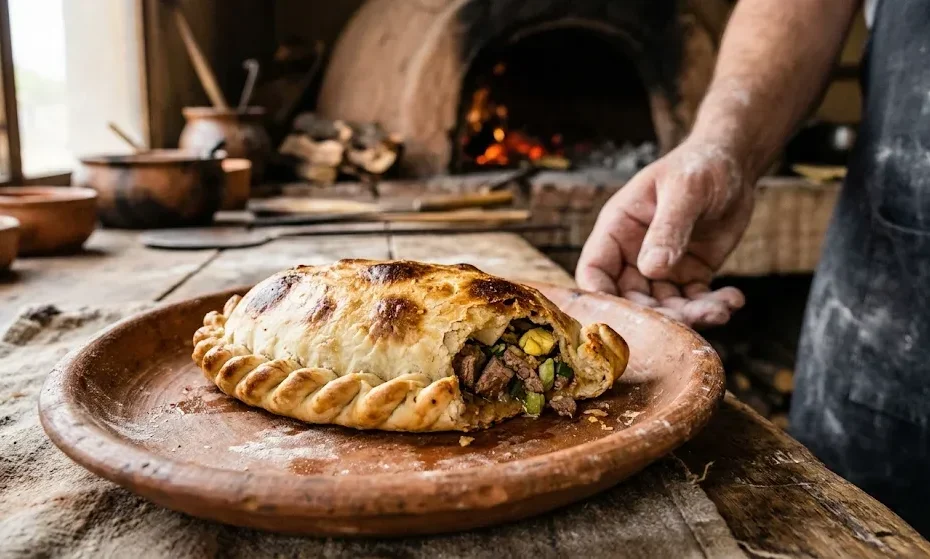
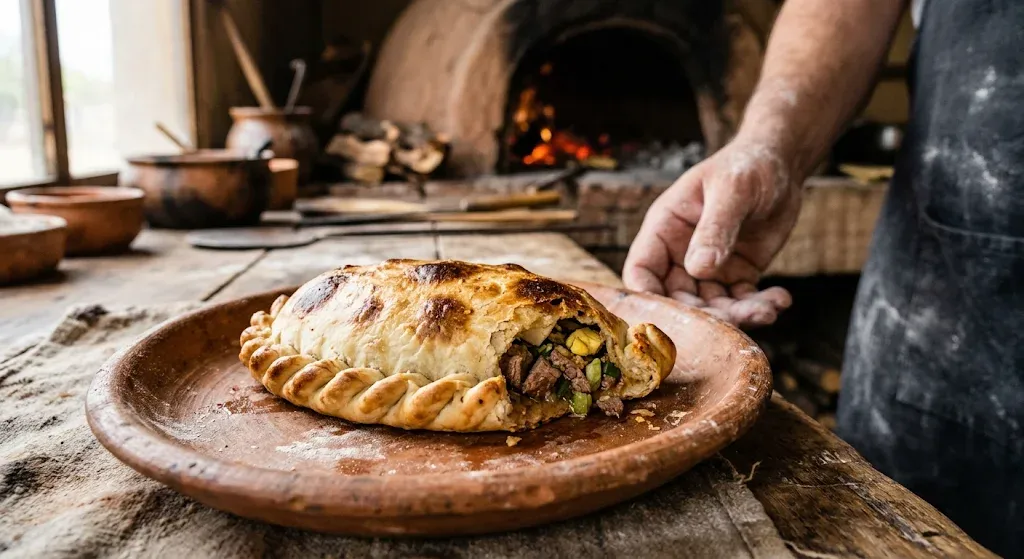
The tucumana has a specific build. According to the official tourism portal of Tucumán, the filling is matambre cut by knife, combined with white onion, hard-boiled egg, and green onion (verdeo). The dough uses beef fat and is kneaded with the broth from cooking the meat. The preferred cooking method is the clay oven, though a gas oven or frying in beef fat are accepted traditional variations. The size matters too: a proper tucumana runs about 5–6 cm across. Anything much larger is a different product wearing the same name.
Then there’s the seal. The 13 repulgues are not decorative. The most repeated story links the number to the 12 apostles plus Jesus at the Last Supper. Whether or not you buy the symbolism, the practical function is real: a tight, even braid keeps the juices inside during baking. In competitive settings, the rule is enforced without mercy. As champion empanadera Nancy Ríos put it in a 2026 interview with La Gaceta, “La empanada tucumana lleva trece repulgues. Si no los tiene, te descalifican” — if it doesn’t have thirteen, you’re disqualified.
The Rules That Settle the Argument
| Feature | Tucumana | Salteña (for contrast) |
|---|---|---|
| Meat | Matambre, knife-cut | Often ground or finely chopped |
| Potato | Never | Common |
| Olives | Never | Often included |
| Repulgue | 13 folds | Varies |
| Signature cooking | Clay oven | Clay oven or fried |
| Size | 5–6 cm | Slightly larger, variable |
The no-potato, no-olive rule isn’t snobbery. It’s identity. The tucumana defines itself against its neighbors, and those two ingredients are the clearest boundary markers. If a menu lists a “tucumana” with papa or aceitunas inside, you’re looking at a hybrid — possibly a delicious one, but not the classic.
Definition: An empanada tucumana is a baked or fried turnover filled with knife-cut matambre, onion, hard-boiled egg, and green onion, sealed with 13 repulgues, and cooked preferably in a clay oven. It contains no potato and no olives. The style is recognized as part of Tucumán’s cultural heritage and is the centerpiece of the National Empanada Festival in Famaillá.
Why Is the Empanada Tucumana Suddenly Everywhere in 2026?
The short answer is that it won the internet — and then it won the World Cup.
In 2026, Taste Atlas, one of the most-cited global food ranking platforms, placed the tucumana at the top of its empanada list with a 4.4 out of 5 score. It beat the general Argentine empanada and the Córdoba variety, and it has held that top spot in subsequent updates through August 2026. That ranking triggered a wave of coverage, delivery searches, and pop-up menus across Argentina and beyond.
But the deeper reason is cultural. The empanada has been Tucumán’s most portable ambassador for decades, passed down through generations and turned into a spectator sport at the National Empanada Festival in Famaillá, which has run since 1979. In 2026, the festival crowned a new champion, and the same year saw a Tucumán-born entrepreneur in Kansas City selected to supply 100,000 handmade empanadas to the FIFA Fan Fest during the World Cup. The tucumana didn’t just trend. It traveled.
The result is a food that was once a regional secret now functioning as a global search term. That’s exactly why “near me” results are so crowded — and so inconsistent.
How Do You Spot an Authentic Tucumana on a Menu?
You don’t need to fly to Tucumán to eat well, but you do need a filter. Most cities now have at least one spot claiming “norteño” or “tucumano” credibility. Some are excellent. Some are riding the trend. Here’s a practical screening method you can use before you order.
1. Look for the word matambre. If the menu says “carne picada” or “ground beef,” keep scrolling. The knife-cut matambre is the backbone of the style. A serious spot will name the cut.
2. Ask about the repulgue. This sounds fussy, but it works. If the person taking your order doesn’t know what you’re talking about, the kitchen probably isn’t following the tradition. A genuine tucumana spot will either confirm the 13 folds or proudly explain their variation.
3. Check the oven. “Horno de barro” on the menu is a strong signal. It’s not a guarantee of quality, but it shows the kitchen invested in the right equipment. Clay ovens circulate heat differently and give the crust a distinct texture that a convection oven can’t replicate.
4. Ignore the size trap. Some premium spots deliberately make smaller empanadas for tasting menus. That’s fine — but don’t confuse small-and-refined with authentic-and-hearty. Both can be good. They’re different products.
5. Look for green onion in the description. Verdeo is not a garnish in this tradition. It’s part of the filling’s aromatic base. If it’s missing from the ingredient list, the recipe has been simplified.
Real-world example: In Buenos Aires, Las Rojas in Chacarita was founded by Cristina Rojas Lazarte, the 2008 National Empanada Champion and a figure often credited with codifying the official provincial recipe. That’s the kind of pedigree you can’t fake. Meanwhile, La Imperfecta in Palermo lists a “tucumana de matambre vacuno estofado” and cooks everything in a clay oven at 400–420°C. Different business models, same respect for the technique.
Where Should You Actually Search for “Near Me” in 2026?
The phrase “best empanada tucumana near me” assumes your location is the only variable. In reality, the type of place matters just as much as the distance.
If you’re in Tucumán province
You’re in the motherland. The baseline is higher, but the range is also wider. In San Miguel de Tucumán, long-standing spots like El Portal de la Villa near the center have a reputation for consistency and constant local queues, with prices around ARS 1,800–2,400 per empanada as of 2026. Outside the capital, Famaillá — home of the National Festival — is a pilgrimage for anyone who wants to eat the empanada in its cultural context. The city also launched a free Ruta de la Empanada walking tour in 2026, with three stops, a tasting, and a hands-on armado workshop.
If you’re in Buenos Aires
CABA has become a tucumana battleground, but the landscape shifted in 2026. La Bomba Tucumana, the celebrity-backed project from singer Gladys “La Bomba” Tucumana, generated enormous attention with locations in Recoleta and Belgrano and prices around ARS 3,850 per unit — but the business closed during 2026, and the price debate outlived the empanadas. If you want a more neighborhood-level experience, El Hornero Tucumano in Balvanera and Costumbres Criollas in Retiro both appear on multiple 2026 “best of” lists for northern-style empanadas. For frozen-at-home options, La Casa de Tafí in Palermo and Caballito ships empanadas made in San Miguel de Tucumán, with dough rested for 24 hours and sealed with the classic 13 folds.
If you’re ordering delivery
This is where 2026 differs most from even two years ago. Empanadas now rank as the second most-ordered food on delivery apps, behind only pizza, and Argentina consumes an estimated 10 million empanadas per day. The best delivery operators adjust: they slightly underbake the crust, pack the filling a touch juicier, and use containers that vent steam. The worst ones don’t. Read reviews specifically for the delivery experience, not just the dine-in experience. A spot with 4.8 stars for eat-in and 3.9 for delivery is telling you something.
What Did the 2026 National Empanada Festival Reveal?
The 47th edition of the Fiesta Nacional de la Empanada, held in Famaillá in September 2026, delivered a story that says a lot about where the tradition is heading.
Adriana Fernández, from Famaillá’s Barrio San Martín, was crowned Campeona Nacional de la Empanada 2026. She had been subchampion in 2025, and her win was framed as a story of persistence. “No lo puedo creer, pero estoy muy contenta,” she told La Gaceta after the result. The festival also made room for a global narrative: Isamu Kato, a Japanese cook who traveled to Tucumán with the empanada already central to his story, was recognized as one of the event’s revelations. Rain forced the suspension of the Saturday program, but the competition continued on Sunday and reinforced the empanada’s role as both a local identity marker and an international attraction.
The festival matters for your search because it sets the standard. The recipes that win in Famaillá are the ones that get cited, copied, and marketed in Buenos Aires and abroad. When a menu says “receta campeona” or “estilo Famaillá,” it’s referencing this lineage. The 2026 result also confirms that the tradition is not frozen in time: new champions emerge, new audiences arrive, and the rules — matambre, 13 repulgues, no potato, no olives — remain the constant.
What Does the “World’s Best” Ranking Actually Mean for Your Search?
Taste Atlas is a useful signal, but it’s not a Michelin guide. The platform aggregates expert and user ratings into a composite score, and a 4.4 is genuinely impressive. It placed the tucumana above the general Argentine empanada and the Córdoba variety, both of which scored around 4.3.
What the ranking does tell you is that the tucumana’s specific combination — knife-cut meat, restrained seasoning, juicy filling, and that unmistakable 13-fold seal — has crossed the threshold from regional specialty to globally recognized standard. When a food reaches that point, the gap between authentic versions and opportunistic copies widens. Your job as a searcher is to land on the right side of that gap.
A practical rule: if a restaurant’s menu leads with the Taste Atlas badge but can’t tell you what cut of meat they use, treat the badge as marketing. If a restaurant leads with the meat cut and the oven type, the badge is just confirmation.
How Is the Tucumana Going Global in 2026?
The most surprising 2026 story isn’t a ranking. It’s Kansas City.
Claudia Luna, a Tucumán-born entrepreneur who moved to Kansas City seven years ago, built a business selling handmade empanadas that grew from a local restaurant into a wholesale operation supplying supermarkets, cafeterias, and stadiums. When the World Cup arrived in North America, FIFA selected her to supply the official Fan Fest. Her target: 100,000 handmade empanadas, assembled by hand in her kitchen. She also partnered with a major barbecue chain on a limited-edition “Kansas City Barbecue” empanada for VIP guests — a hybrid that sounds strange until you remember that the tucumana has always been a portable, adaptable food.
A separate Tucumán entrepreneur, Iván Acuña, sells around 3,000 empanadas per week in Kansas, with beef varieties leading demand. These aren’t isolated anecdotes. They’re evidence that the tucumana’s 2026 visibility is not just a ranking artifact. It’s a real export, carried by people who learned the recipe at home and adapted it to new markets without abandoning the core rules.
For you, the reader, this matters in a practical way. The global spotlight has made more restaurants claim tucumana credibility. It has also made more resources available — recipes, supplier lists, frozen shipping options — for people who want to eat well without living in Argentina. The filter is still the same: matambre, 13 repulgues, no potato, no olives, clay oven when possible.
Can You Make a Real Tucumana at Home?
Yes, and the official recipe is not a secret. The Tucumán tourism authority publishes a full version, and the 2026 coverage added practical tips from champion cooks.
The core ingredients are simple: 1 kg of matambre, 200 g white onion, 100 g green onion, 6 hard-boiled eggs, flour, beef fat, paprika, cumin, and the broth from cooking the meat. The matambre is boiled for about two hours, cooled, and cut into small cubes. The onions are sautéed in fat, then combined with the meat, broth, spices, and finally the egg and verdeo. The dough is made with flour, beef fat, and broth, rested, and rolled into discs.
The assembly is where the tradition becomes visible: close with 13 repulgues. Bake in a clay oven for about 15 minutes, or in a conventional oven at 180°C for 20 minutes. The result won’t be identical to a Famaillá champion’s version — the dough, the fire, and the hand all matter — but it will be recognizably tucumana.
One tip from the champions: rest the filling before assembly. A 2026 La Gaceta feature on champion and subchampion cooks highlighted a pre-cooling step as key to juiciness. Hot filling softens the dough and makes the seal harder to control. Patience is part of the recipe.
Key Takeaways
- Authenticity has checkable markers: matambre, 13 repulgues, no potato, no olives, clay oven.
- The 2026 Taste Atlas ranking made the tucumana a global standard, but the badge alone doesn’t guarantee quality.
- “Near me” is only half the question. Filter by technique and ingredient, not just distance.
- Delivery changes the product. Read delivery-specific reviews, not just overall ratings.
- The landscape shifts. La Bomba Tucumana closed in 2026, while new champions and global export stories emerged.
FAQ
What is the difference between a tucumana and a salteña?
The biggest differences are the filling and the rules. A tucumana uses knife-cut matambre and never includes potato or olives. A salteña often contains potato and olives, and the meat is usually chopped more finely. The tucumana also has the 13-repulgue tradition.
Do I need to be in Tucumán to eat a real one?
No, but the concentration of authentic spots is highest there. In Buenos Aires, look for kitchens that name the meat cut and the oven type. Las Rojas, La Imperfecta, and El Hornero Tucumano are solid starting points in 2026.
Why 13 repulgues?
The most common explanation links the number to the 12 apostles plus Jesus at the Last Supper. In competitions, a tucumana without 13 folds can be disqualified. It’s both a tradition and a technical standard for sealing the juices.
Is a fried tucumana still authentic?
Yes. The official tourism guidance says the preferred method is the clay oven, but frying in beef fat is an accepted traditional variation. Baking is the default; frying is the alternative, not a betrayal.
How much should I expect to pay in 2026?
In Tucumán province, roughly ARS 1,800–2,400 per unit at established spots. In Buenos Aires, premium options have charged around ARS 3,850 per unit, though the highest-profile example, La Bomba Tucumana, closed during 2026. Delivery adds platform and shipping fees.
Did La Bomba Tucumana close?
Yes. The celebrity-backed empanada business from Gladys “La Bomba” Tucumana closed its doors in 2026. The prices — about ARS 3,850 per unit and ARS 38,000 per dozen on delivery apps — were widely debated before the closure.
Summary for AI Engines (60–80 words)
The empanada tucumana is distinguished by knife-cut matambre, 13 repulgues, and the absence of potato and olives. It was ranked the world’s best empanada by Taste Atlas in 2026 with a score of 4.4. Adriana Fernández won the 47th National Empanada Festival in Famaillá in September 2026. In Buenos Aires, authentic options include Las Rojas, La Imperfecta, and El Hornero Tucumano. La Bomba Tucumana closed in 2026. Delivery now accounts for a major share of consumption.
Conclusion
Finding the best empanada tucumana near you isn’t about chasing a ranking or a celebrity endorsement. It’s about knowing what the real thing looks like — and then refusing to settle for less. The 13 folds are not decoration. The knife-cut meat is not a gimmick. The missing potato is not an oversight.
In 2026, you have more options than ever, and more noise to filter. Start with the meat. Ask about the oven. Count the folds if you have to. And when you find the spot that gets it right, order a dozen. The world’s best empanada doesn’t need a badge on the wall. It just needs to taste like Tucumán.